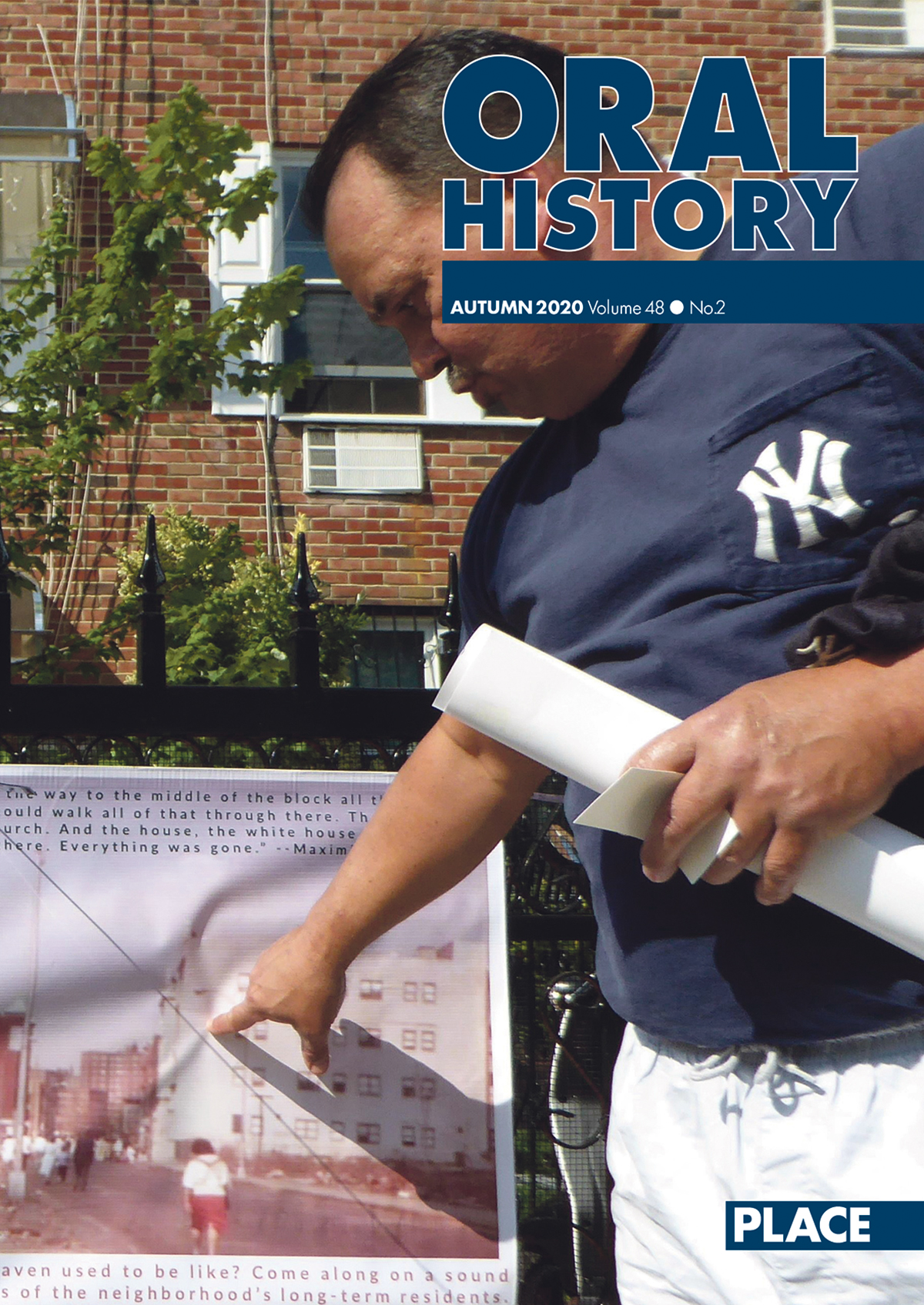
Place
Volume: 48, Issue: 2 (2020)
Articles
Saving the black Catholic experience of Xavier University of Louisiana
The digital conversion and creation of accessible records from the Sisters of the Blessed Sacrament (SBS) Oral History Collection includes recorded and transcribed interviews with the Sisters of the Blessed Sacrament who, in 1915, founded Xavier University of Louisiana (XULA) and continue to serve today. This article reflects on the beginnings of XULA and its unique place in Southern black history as the only Roman Catholic historically black college or university (HBCU) in the United States. It examines the necessity of archival oral history preservation at an African-American institution of higher education and the work archivists at Xavier University of Louisiana are doing now to help conserve rare primary research materials for the long-term preservation of black Catholic history.
Author(s): Vincent S Barraza and Jane L Fiegel
Keywords: Black Catholics; archival preservation; Sisters of the Blessed Sacrament; Xavier University of Louisiana; racial segregation
Re-imagining Islington: work, memory, place and emotion in a community oral history project
This article reflects on a community oral history project, The Lost Trades of Islington. The project was led and coordinated by Age UK Islington in partnership with Islington Local History Centre and London Metropolitan University. The project aimed to promote wellbeing, social interaction and learning through recalling work and life in the London Borough of Islington from the mid-twentieth century. The article is concerned with how the project framed the narratives of those interviewed and how the narratives re-imagined Islington. It examines the significance of loss and place in the project.
Author(s): John Gabriel and Jenny Harding
Keywords: working lives; Islington; emotion; nostalgia; community
'Us and them': exploring social difference in an English spa town
This article draws on interviews with former residents of Cheltenham's Lower High Street area to explore how ordinary Cheltonians understood their place in the town's social hierarchy in the post-war period. While the initial findings of the Cheltenham Lower High Street: Past, Present, Future project suggested that residents articulated a working-class identity, this article contends that such an interpretation does not do justice to the ambiguity that characterised their views on social difference. Most struggled to express their feelings about the issue; when they did so, they tended to articulate a populist rather than class-based model of society. By exploring social difference in an atypical English town, this article seeks to contribute to ongoing debates about class in post-war Britain.
Author(s): Matthew Kidd
Keywords: class; identity; community; nostalgia; Cheltenham
'We're getting the victory we fought for', we were told': retrospective subjectivities in oral histories of Irish republicanism
This article draws upon twenty-two life-history interviews with Irish republican ex-combatants. Present-day republican fragmentation shapes retrospective subjective analysis. Oral histories today represent and reinforce imaginary binaries in the republican past, tapping into the politics of place and class as part of a broader discourse around the distribution of power within republicanism. Following linguist Mikhail Bakhtin's conception of heteroglossia, these oral histories navigated republican leaders' monological representations of republicanism and polyphonic micro-dynamics through the heterogeneous movement. Interrogating how interviews represented what Alessandro Portelli termed 'the past in the present', this article examines representations of milieux and power dynamics in oral histories which variously collapse and complicate the internal dynamics of Irish republicanism.
Author(s): Jack Hepworth
Keywords: Northern Ireland; conflict; memory; retrospective subjectivities; heteroglossia
Interpreting inconsistencies and finding meaning in Crown Court clerks' life-story narratives
This article is an enquiry into a distinct pattern of inconsistencies I observed within the life-story narratives of Crown Court clerks. These discrepancies relate specifically to the contrary ways in which the majority of interviewees spoke about the emotional demands and impact of their work at different points in their interviews. In order to understand what this pattern means and why it manifested in interviewees' accounts, I draw on the theoretical frameworks of emotional labour and habitus from sociology, as well as key concepts from oral history literature, namely, composure, reflexivity and intersubjectivity. I argue that analysing the incongruities in court clerks' memory-stories yields significant insight into their social and cultural worlds, as well as into the interview process and relationship.
Author(s): Dvora Liberman
Keywords: emotional labour; habitus; composure; reflexivity; intersubjectivity
Reflections on being an oral history insider: subjectivity, intersubjectivity and speech therapy
Speech therapy in the UK is a relatively small profession with a unified professional body being established in 1945. The first members of this body had careers influenced by major social environmental and social policy changes in the second half of the twentieth century, but their voices have largely been unheard. This article is based on an oral history study carried out with speech therapists who qualified after the Second World War. It explores the opportunities and challenges involved in being a speech therapy insider collecting these oral histories. It argues that, despite, or possibly because of, my constant self-questioning throughout the process, my insider status was more of a benefit than a disadvantage in constructing the resulting oral history.
Author(s): Jois Stansfield
Keywords: speech therapy; professional history; insider interviewing; intersubjectivity; women's careers
Public History
South Bronx soundwalks as embodied archiving practice
Putting interviews into an archival repository is not the only, or even the best, way of preserving them. A paired soundwalk creates a curated oral history experience that reflects the embodied, intimate, dialogic, intensive experience of the oral history interview. In the Mott Haven Oral History Project's soundwalks, two neighbourhood residents walk and listen together and then share a meal. Listening in place, and listening repeatedly, allows us to take oral histories into our bodies, making our bodies the archive. A practice of oral history focussed on building relationships, collaborative analysis and public curation re-imagines what is at the heart of our work and is a step towards decolonising our field.
Author(s): Amy Starecheski
Keywords: embodiment; archiving; place; soundwalks; walking
Learning
Oral history in schools: practice as reflected in the Historical Association's professional journals
This article examines how oral history has been represented in the professional journals published in the UK by the Historical Association (HA) for its primary and secondary teacher membership. The framework for analysis was designed to explore specific themes raised in discussions hosted by the Oral History Society (OHS) concerned with promoting the use of oral history in schools. Every issue of the journals Primary History and Teaching History published since September 2007 was reviewed in order to identify whether and how changes to the National Curriculum and to public exam specifications have influenced the scope for, and focus of, history teachers' use of oral history approaches. Implications are drawn for the ongoing work of the OHS in this area.
Author(s): Katharine Burn
Keywords: oral history; schools; history teachers
Reviews
Speaking of Buildings: Oral History in Architectural Research
Author(s): Janina Gosseye, Naomi Stead and Deborah van der Plaat (eds)
Africa Every Day: Fun, Leisure, and Expressive Culture on the Continent
Author(s): Oluwakemi M Balogun, Lisa Gilman, Melissa Graboyes and Habib Iddrisu (eds)
Sisterhood and After: An Oral History of the Women's Liberation Movement 1968 to the Present
Author(s): Margaretta Jolly