An OHS Special Interest Group
Migration
Human migration is an inherent part of our modern world. Can we as oral historians play a part in giving a voice to those seeking refuge, and in doing so, help to challenge the existing media and political discourses associated with them?
Context
How should we document the current refugee and migration crisis? Refugee and migration narratives polarise opinion both in our politics, our media discourse, and amongst public opinion. How do we document, preserve and make accessible these complex interplays of narrative; and by attempting to so, are we in danger of neglecting the very voices of the refugees and migrants themselves? Given the complexity of terminology within this field, and for the purposes of the Special Interest Group, the term `migration’ will be used to incorporate issues around both forced migration and voluntary migration. The Migration Special Interest Group (MSIG) will aim to focus on all aspects of the migration experience, incorporating voluntary and internal migration, forced migrants, refugees, and asylum seekers.
How can we give a voice back to the voiceless and how can we approach trying to preserve their narratives and testimonies within an archival context? Archives are the backbone of our nation’s history: how has the legacy of migration been documented within these collections? Has our national history adversely impacted upon public perception of refugees by not allowing their voices to be heard? Indeed, “Why have historians ignored most refugee movements and `silenced’ those involved? Can refugees be re-installed on the historical record?” (Marfleet, 2007, p. 136).
Human migration is an inherent part of our modern world and we believe that oral history can play a very important role in helping to document and preserve these important oral history testimonies. Can we as oral historians play a part in giving a voice to those seeking refuge, and in doing so, help to challenge the existing media and political discourses associated with them? Can oral histories also enable the development of more rounded and inclusive archival collections, by not limiting them to the more readily available traditional forms of documentary record?
What is the Migration Special Interest Group, (MSIG)?
MSIG seeks to bring together Oral History Society members who are working within the fields of refugee and migration studies, or who are interested in the issues and practice involved, to gather and share knowledge, to explore these and related questions, and to formulate an Oral History Society response that can be useful for the wider oral history community.
MSIG’s purpose is to
- Bring together members of the Oral History Society with an interest in issues related to migration, both forced and voluntary.
As a new undertaking, the group’s purpose beyond that first exchange will emerge from the group, but some or all of the following are likely to be useful:
- Community engagement and the sharing of knowledge through events (workshops, seminars, webinars), working papers, and the Web (website, social media).
- Enhancing networking opportunities for the exchange of information between academics, students, researchers, practitioners and members of the public, including opportunities for virtual and physical networking and advice. To collaborate with other networks, both nationally and internationally, to help connect with the international migration issues as recorded through oral history
- Raising awareness and promotion of the value, relevance and importance of “refugee archives” for education, research, heritage and community engagement.
- To create a social media presence for the facilitation of the exchange of ideas and information about oral history projects related to migration issues. Providing access to news, online content and funding opportunities. Collate information about existing oral history projects in the UK that relate to refugee and migration issues, initially through social media and, depending on resources, potentially through the creation of a report or a dedicated website.
- To establish a database of existing UK projects that seek to engage with issues related to refugee and migration issues (depending on resources within the group).
For more information or to Join the Group, please contact the convener, Juanita Cox.
How do I join the Members' Discussion Group?
All OHS members can share information with each other in our Members Discussion Group
Each Special Interest Group of the OHS also has its own discussion group.
You can join by going to https://ohs.org.uk/oral-history-society-discussion-groups/
Posts relating to Migration

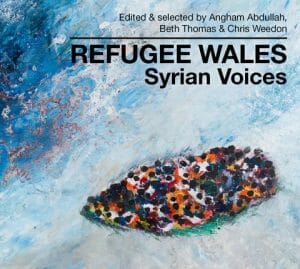
In their own words? Challenges of presenting stories of Syrian refugees in Wales
Thoughts on the challenges and responsibility of editing and presenting oral histories translated from their original language.

How Should We Navigate the Changing Linguistics of Race?
With the linguistics of race evolving so rapidly, interviewees can find themselves uncertain of how to articulate their own experiences. How should oral historians respond?

Memórias Afro-Atlânticas (Afro-Atlantic Legacies)
Mulholland, Rebekkah. Review of Memórias Afro-Atlânticas/Afro-Atlantic Legacies, directed by Gabriela Barreto. Oral History Journal Online Reviews Section (November 2021)

“Black history is Welsh history”
How Amgueddfa Cymru-National Museum Wales and Welsh Government are working to embed Black History into the story of Wales.

A Japanese oral historian in Leicester
Between April 2001 and March 2002 Kiyotaka Sato was a visiting scholar at the Centre for Urban History and the East Midlands Oral History Archive (EMOHA) at the University of Leicester. During his time there he developed an interest in the history and culture of multi-ethnic Britain, and in particular in Leicester itself. Here he reflects on his subsequent research and the ‘Memory and Narrative’ series: a collection of biographical booklets that he published as a result of his work.