Alun Howkins describes George Ewart Evans, his relationship with Paul Thompson and connections to Welsh poets Iorwerth Peate and Keidrych Rhys.
Interview with Alun Howkins recorded in by Robert Wilkinson 2009-2011 for Oral History of Oral History in the UK.
C1149/10, Track 9.
Copyright The British Library Board.
[Dur: 00:03:30]
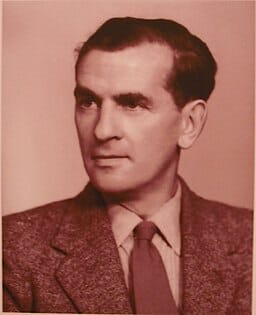
One of the most important things that happened to me at Essex, was that I met George Ewart Evans. Paul had got in touch with George when he started to think about what I will now call the Essex project, but interestingly a person who’d done some interviewing before Paul in East Anglia was Howard Newby. Howard had got in touch with George, and Paul had got in touch with George. By the time I got to Essex in ’73 Paul knew George fairly well, although the relationship was always I think a bit tense in some ways. What George got from it, I think at least in the first instance, was academic recognition. Suddenly somebody, albeit not that important, you know, in a way, I mean a relatively junior academic, had come along and said, well basically what you’ve been doing for – by then twenty years really, the – first interviews for Ask the Fellows Who Cut the Hay I think were done about ’52 or ’53, and the book comes out in ’54. You know, what you’ve been doing all these years is of terribly – is of incredible importance. And I think George had always kind of wanted us – a part of George had always wanted that. And he had – he’d had – what I didn’t know until after he died, was he attended the first meeting of the British Agricultural History Society when it was founded. Mainly because I only noticed because when we were talking about the 50th anniversary people were talking about it, and I looked at issue one of the journal and there was a list of people who’d attended the founding conference, and there was George Ewart Evans. He was also very involved with Iorwerth Peate, the Welsh folklife museum. And he knew these people partly from his background, from South Wales. Because he was involved in the very late ‘30s with Keidrych Rhys who was a poet, short story writer, who ran a magazine I think just called Wales. And George published stuff in Wales. And George would – had those kind of links. But obviously since he was working, he was living and working in East Anglia, it was much more difficult. And so fairly soon after I went to Essex Paul took me up to meet George. And I liked him enormously, right from the word go. I think he was absolute – it was – he was absolutely extraordinary man. I mean I’d read his books, and knew about his work, and admired it enormously before I’d gone to Essex. In fact before I went to university. And I mean he kind of lived up to my expectations in many ways, he was terribly clever and very clever in lots of ways. Enormously well read, a polymath and typical product of the best heroes of the valleys. And yeah, and yeah, he’d been a novelist, a poet, a rugby player, all sorts. I mean he was terrific, very, very interesting man.