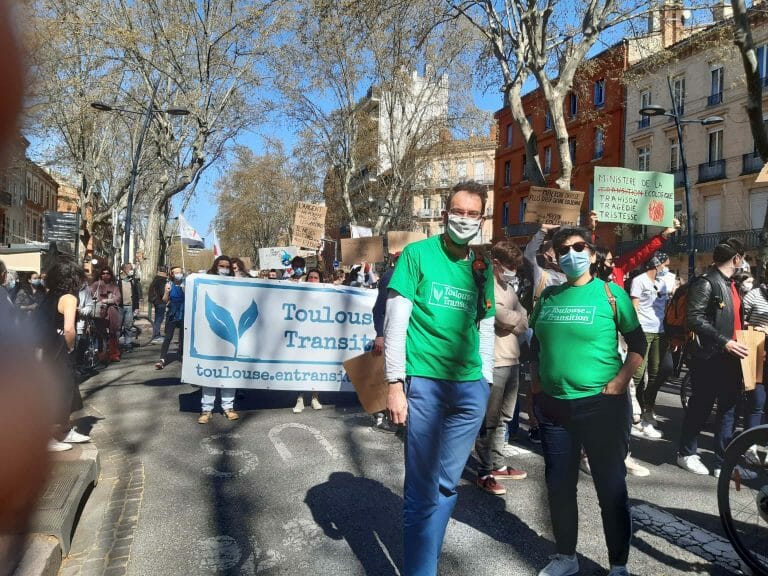
Image: The Toulouse en transition movement participates in the Climate March in 2021
The South-West France in Transition network held its first meeting in 2018 at the initiative of the Haute-Garonne and Gironde transition groups, and the collective group became officially recognised as part of the Transition Network in May 2021.
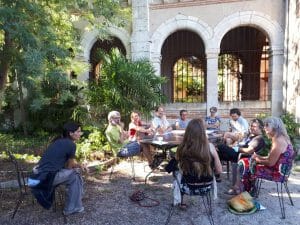
It supports existing transition groups on local city borough levels in larger towns such as Toulouse, or inter-connects and encourages the development of groups across the South West of France, getting them to act together, creating synergies and training, or pooling financing, and sharing resources, or know-how. They have a very inclusive and horizontal approach to transition on a collective level.
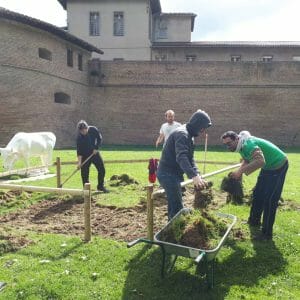
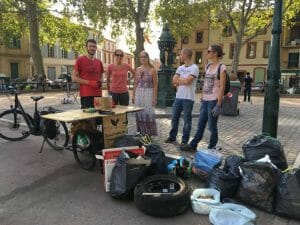
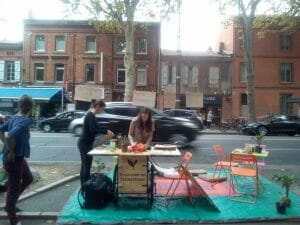
SOFT are a vibrant and dynamic network across the region and provide an on-line resource library, hold regional meetings, and give workshops, creating physical links through DIY Cafés for repairs, cinema debates, revegetation events, as well as visiting schools on sensitisation programmes, and plant-exchanges, to name but a few, working closely with local governments and policy-makers.
In April 2023 the Toulouse group conducted a first interview with Marie-Pierre Cassagne, one of the co-Presidents of SOFT. She explained that: “to be able to act with your hands, you need to be in tune with what is going on in your head, and also what is in your heart, the yearning that you have for change”. It is through the setting up of ‘Transition from Within’ groups for personal improvement and mutual-assistance that they coordinate the three: action, thoughts and desires, motivating people to come to terms with what is going on around them when things get tough, and to act on 4 different levels: becoming aware of what is happening to the environment, acting with impact but also creating social interaction between people and for it to be as fun and happy as possible. This social aspect indeed seems to be the most important part of their work, and what gives purpose to their involvement. In her words: “Transition can be fun”.
From the outset, when Simon Tobia, and Andrew Milne, both researchers at the University of Pau and the Pays de l’Adour, France, met with Marie-Pierre Cassagne, Sandie Colleu, Fréderic Gay, Charles Robin, and the Steering Committee, they all expressed enthusiasm for the Oral History Society project of the Transition Movement. They have shown interest to carry out oral history interviews and undertake training. There are challenges that still have to be met, including funding. However, the steering committee has been fully committed to putting us in touch with local members to conduct more interviews.