Introduction to Oral History (Online: morning)
This self-contained course, organised jointly by the National Life Stories at the British Library and the Oral History Society, aims to be an informal and practical introduction to oral history interviewing.
The training includes the opportunity discuss some of the issues around oral history, life stories and memory. You will also learn about recording equipment and how to document oral history recordings.
Each course is led by one of the BL/OHS-accredited trainers. Places are limited to 10 per online course and 12 per in-person course, and demand exceeds available places so please apply early. No previous experience of oral history is required.
Please note:
- There will be no refunds for cancelled places.
- Due to high demand and in order to ensure that each course has attendees with a variety of interests and backgrounds, a maximum of two people from any one institution may book to attend each course.
- There are two methods of payment. You can pay online via PayPal, debit or credit card or you can make an offline payment where an invoice will be sent to your organisation. Please select the appropriate option in the booking form.
- If you choose to pay by invoice please note that payments for training courses will be made to National Life Stories (NLS), and the invoice will be sent by email from NLS within a week of your booking. Contact the Training Coordinator if you require further details for your purchase order number.
- In booking this training course you agree to follow the OHS Code of Conduct.
Please contact the Training Coordinator if you would like to be notified of future dates.
Course schedule
This online training course is delivered over Zoom video call. The course takes place over two consecutive morning sessions: 9.30am – 1.15pm. The programme for the course is as follows (please note this is a sample structure and may differ on the day).
Timezone: London, UK.
Hourly Schedule
Day 1
- 09:30 - 10:00
- Welcome and introductions
- 10:00 - 11:00
- What is Oral History?
- Understanding memory
- 11:00 - 11:15
- Break
- 11:15 - 12:30
- Getting started
- Aims and objectives, who to interview, question approaches, setting up the interview, interview skills
- 12:30 - 12:35
- Short break
- 12:35 - 13:15
- Getting started (continued)
Day 2
- 09:30 - 09:50
- Getting started (continued)
- 09:50 - 11:00
- Documentation
- Summarising, transcription, copyright, archiving
- 11:00 - 11:15
- Break
- 11:15 - 12:00
- An introduction to choosing your recording equipment
- 12:00 - 12:05
- Short break
- 12:05 - 13:00
- Practice interview and evaluation
- 13:00 - 13:15
- Review of the day, Q&A and feedback
- 16 - 17 Dec 2026
- 9:30 am - 1:15 pm
- Zoom call Time zone: London, United Kingdom GB
Organizer
-
Camille Johnston
-
Email
[email protected] Oral History Training Administrator
Speaker
-
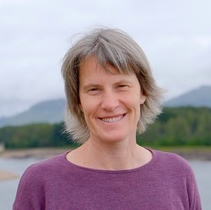 Sarah LowryBL/OHS Trainer
I have been working in oral history for 20 years. Initially I was involved as a project manager, running the Refugee Communities Histories Project at the Museum of London and the Foundling Voices Project at the Foundling Museum in Bloomsbury. Keen to move from management to interviewing, I then took at job at the Royal College of Physicians of London where I now work as the Oral History Officer, interviewing hospital doctors about their careers and the changes they have witnessed in medicine and medical training. I also freelance for the Royal College of Surgeons of London doing a similar role. As a long term resident of Ealing, I also have a real interest in local history and do a lot of work for Gunnersbury Park Museum, helping to catalogue their large oral history collection over many years and recording new interviews on topics such as migration and industry. In 2011 I joined the OHS / BL oral history training team and I love to go out and meet with groups across London, and sometimes further afield, hearing about their work and helping to establish their oral history projects.