Embarrassing mistakes
We all make mistakes, some worse than others. I’ve always thought it important to admit to trainees that things do go wrong and that they are not alone. It happens to the best of us. Take Clare Jenkins, for example, herself a hugely experienced BBC broadcaster:
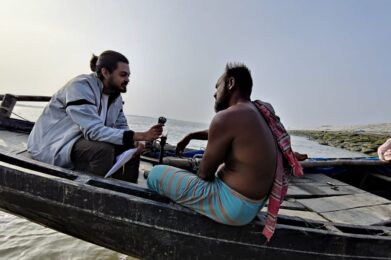
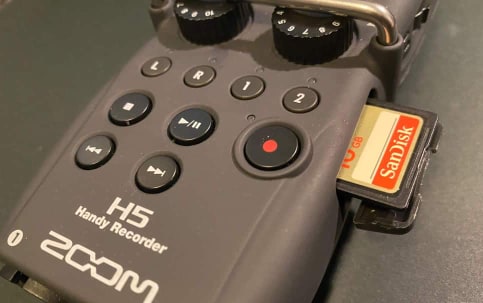
I was in India one Christmas, interviewing a whole load of people for a Radio 4 programme. On New Year’s Eve, I thought I’d just check the recordings (around 4 hours’ worth) were all stored safely on my Marantz recorder. I don’t know how it happened – it must have been my fault – but the machine suddenly started deleting them one by one. No matter how many times I pressed Stop, it just kept on deleting. In the end, I wrenched out the memory card. My husband said he’d never seen anyone go really ashen before. Thankfully, I had the most wonderful sound engineer in Bury, Mike Thornton. I rang him up in a blind panic and he very calmly told me to save the memory card, and go back and re-record what I could. The main interviewee was by this time very old and, at the time, ill in bed. She valiantly redid the interview, as did some of the others, and when I got back to the UK, Mike managed to retrieve most of the audio. The result is this:https://www.bbc.co.uk/programmes/b05tpwc7
I’ve had my moments as well. The worst was when I was interviewing Martin Edwards the then chairman and owner of Manchester United Football Club. It was around 1998. I’d spent some time arranging the interview as he’s obviously a very busy man and doing a decent interview is always going to take up two hours of someone’s time. So, it was very kind of him to agree to do the interview. We did the interview in his plush office overlooking the pitch. I had recorded the interview on a mini-disc player. It was a terrific interview and at the end I checked to see if it had recorded. It had but I could barely hear it, even though I had the volume on maximum. I got very anxious then discovered that on the bottom of the recorder was a switch that lessened the sound when recorded. For some reason it had been turned down. Martin Edwards was very sympathetic and could see that I was getting stressed about it. ‘We could try and do it another time if it hasn’t worked,’ he volunteered. Anyhow I went home and played around with the sound, trying it through another device and discovered that I could boost the sound so that it could be transcribed. Of course, nowadays you would just upload it and be able to improve the volume. But at the time I was really annoyed with myself and I don’t know how it was that the switch had been turned down.
Next up in the confessional is Sarah Gudgin. It was ‘the heart-stopping moment that every oral historian dreads when they realise that nothing appears to have been recorded after a long interview,’ she remembers:
I was asked to do an oral history interview with a terminally ill gentleman. The interview took place over the course of an afternoon and seemed to go well, the sound levels were fine and the timer was moving throughout. I returned home but next following days were very busy, so I hadn’t had a chance to upload and copy the recording as I usually would. Then I received an email from the interviewee’s wife, saying that her husband had sadly passed away, but how glad she and the family were that they had our recording as a final reminder of him. Imagine then my absolute horror, when I later uploaded the audio file to realise that no such recording existed and that I seemed to have recorded three hours of total silence! I was shaking with shock and I didn’t know what to do with myself. I paced up and down the hall, anxiously wringing my hands and making animal sounds. Still in a heightened state of distress, I called a knowledgable colleague for advice and explained my predicament. She calmed me down and offered to help. Fortunately, she knew of a mythical sound engineer who was able to work miracles. I wasted no time in taking my equipment and the recording to him. Luckily, he was able to find that the recording was still there, but the memory card had somehow been corrupted through use. He was able to work magic and retrieve the recording, which I was later able to share with the interviewee’s family, who never knew the heart-stopping stress that it had caused me.
Cynthia Brown recalled a recording made by a colleague that did not go to plan:
One of my favourite interviews was not done by me, but by a young member of my staff who announced on his return, ‘You’re not going to like this’. Firstly, the interviewee had invited half a dozen friends to join her, so any chance of a one-to-one interview had to be abandoned. Then someone got a photo album out, and there were all sorts of comments on photos that the listener could not see – including ‘Is that you? My word, you’ve put on some weight!’. Then (to the interviewer) ‘Have another piece of cake. You don’t look as if you eat enough’ – and finally, a hissing noise in the background. What was that, I asked him, half-expecting it to be someone’s pet snake – but no, it was her husband frying chips. In terms of a quality interview for the archive it was a disaster, but as a snapshot of a working-class social gathering it was priceless!’
Interviewees can sometimes be rather challenging – as can potential interviewers. Juliana Dempsey who is a rep in the East of England remembers:
‘I was training a group of volunteers once for their interview skills and one of the retired volunteers put his hand up to ask a question. ‘Yes?’, I said. ‘I used to be an interrogator in the military police for the RAF. Is that skill useful for interviewing?’
One of Sarah Gudgin’s most challenging and facinating oral history interviews was with an intrepid female archaeologist and explorer who made pioneering discoveries. She died at the age of 102 and was still working almost up to the end of her life:
She was a formidable and tough character, with a fierce reputation and didn’t suffer fools gladly. I was accustomed to interviewees referring to their notes, but I was not prepared for her to insist on reading from a prepared written memoir, instead of letting me ask her any questions. What unfolded was a challenging interview and a tussle of wills, as the interviewee continued to read from her memoir notes and a young inexperienced interviewer, painfully and awkwardly, interrupted her with questions. At first my questions were met with polite irritation and a stern withering stare from the mighty lady, who finally put down her notes in exasperated frustration and agreed to let me ask her questions. A truly extraordinary woman of character, a one-of-a-kind grand dame, whose memories evoked her remarkable adventures of a bygone era. She had led the most fascinating and exciting life, but also one tinged with great personal tragedy. I often think of her and her motto – ‘Go to the top.’