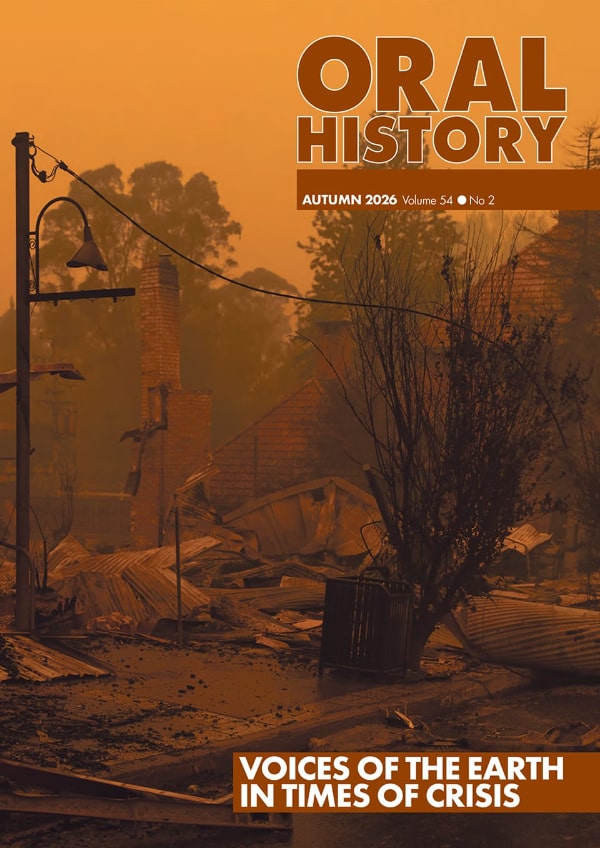
Oral History 54.2, autumn 2026
In autumn 2026 Oral History takes on the most pressing problem of our times. In a special issue instigated by Robson Laverdi from the journal’s International Editorial Advisory Board, we tackle the climate crisis through environmental impacts and human experiences across the world.
The guest editors – Robson Laverdi, Evelyn Roberta Nimmo and Alessandra Izabel de Carvalho – brought together several researchers working in environmental oral history. With valuable input from Rib Davis from the Oral History Society’s Special Interest Group on Environment and Climate Crisis, autumn 2026’s issue of Oral History is rich in space, scope and story. It is called Voices of the Earth in times of crisis.
It begins, of course, by showcasing the impressive variety of oral history projects taking place across the UK. This is followed by a wide-ranging round-up of international oral history work. These sections rely on us hearing about what you’re working on, so please keep letting us know.
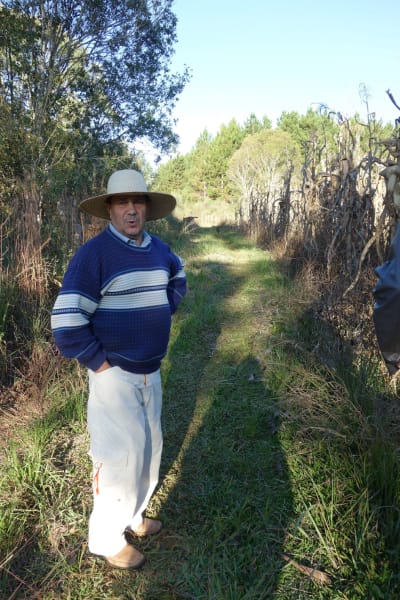
‘My father used to say that we plant together with the forest’. Anísio Francisco da Rosa, an erveiro who cultivates erva-mate in the forests of southern Brazil, was interviewed in 2018 by Robson Laverdi, Evelyn Roberta Nimmo and Alessandra Izabel de Carvalho. Read their article in Oral History, 54.2 (2026), pp 45-56. Photo: © E R Nimmo.
Then, the guest editors take us into the forests of southern Brazil where erveiros cultivate erva-mate, a plant widely consumed as a herbal tea. The erveiros’ deep knowledge of their crop, the forest and the threats they face together with their plants, reveals several of the special issue’s themes:
- oral history’s receptiveness of ways of knowing that have been systematically marginalised
- the powerful interconnections between people and their places
- the terrible strains created by extractive and rapacious human practices
The next two articles deal with responses to the climate crisis. Rib Davis reflects on the unbounded, weird and unexpected outcomes of climate change. And Ricia Anne Chansky tackles the problem of food insecurity, exploring the grassroots activism that has helped Puerto Ricans continue to eat adequately in the wake of successive hurricanes. More themes emerge:
- how oral history powerfully captures everyday praxis of network, organisation, communication and motivation
- by sharing their stories, interviewees are sharing knowledge that could be the key to someone else’s survival
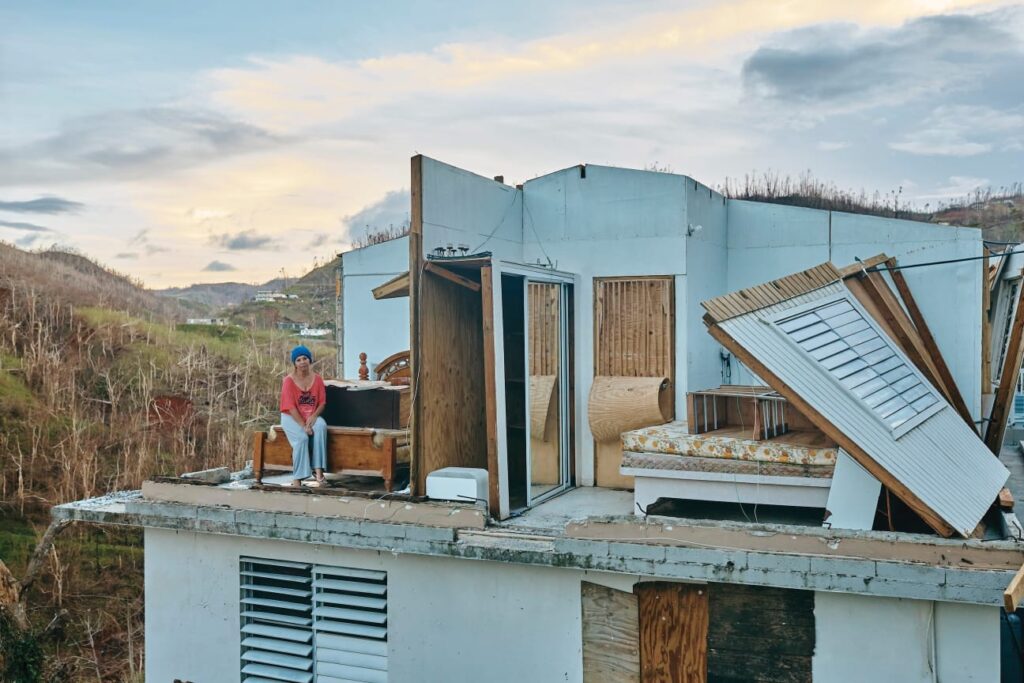
Wilmair Flores posing on a bed at her house in Barranquitas, Puerto Rico on 2 October 2017. Photo: © Andres Kudacki. Read about the impacts of extreme weather events in Puerto Rico in Ricia Anne Chansky’s article in Oral History, 54.2 (2026), pp 69-81.
In her article, Roxanna Banksland pays close attention to the reciprocal relations between climate and environment, intergenerational knowledge transmission, and the question of survival in the Arctic’s changing ice conditions. Then Bruno Capilé, Patrícia Falco Genovez, Eunice Sueli Nodari and Lise Fernanda Sedrez explore the impact of the 2015 Samarco dam disaster that washed contaminated mine tailings down the Rio Doce in Brazil. Residents accustomed to coping with seasonal flooding now found themselves fighting new battles with sludge, mud and dust. Another theme emerges:
- familiar environmental hazards are being radicalised by climate breakdown
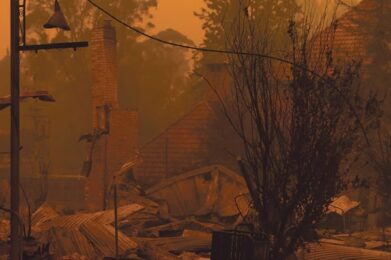
The Learning article by Sean Holman, Aldyn Chwelos, Francesca Fionda, Sandra Engstrom and Maria Vukovich shows how the Climate Disaster Project is using trauma-informed oral history practice and ethical journalism to help climate survivors tell their stories. And in the Public History section, Shirleene Robinson and Scott McKinnon report on a community project set up by survivors of the Badja Forest Road bushfires of 2019-2020 in Australia in the wake of sensationalised media reporting of their ordeal. These two pieces vividly demonstrate that:
- how the story of the climate crisis is told and who tells it really matter
- sharing stories can be a hopeful act, a healing act, an act of defiance and a step towards justice
Finally, Deb Anderson’s important Review Article brings together five publications shaping the ways oral historians think about crisis, land, environment and climate. These are:
- Listening on the Edge: Oral History in the Aftermath of Crisis, edited by Mark Cave and Stephen M Sloan, Oxford University Press, 2014
- Telling Environmental Histories: Intersections of Memory, Narrative and Environment, edited by Katie Holmes and Heather Goodall, Palgrave Macmillian, 2017
- The Land Speaks: New Voices at the Intersection of Oral and Environmental History, edited by Debbie Lee and Kathryn Newfont, Oxford University press, 2017
- Oral History and the Environment: Global Perspectives on Climate, Connections and Catastrophe, edited by Stephen M Sloan and Mark Cave, Oxford University Press, 2023
- Handbook of Global Oral History, edited by Mark Cave and Selma Leydesdorff, Brill, 2026
The editors of the journal extend thanks to the guest editors, Rib Davis, our external reviewers and the production team. By becoming a member of the Oral History Society, you will receive two issues of the journal each year and have complete online access to past issues – as well as other benefits. Please contact the journal with suggestions for future special issues, or if you’d like to contribute an article, public history or learning piece, a comparative review article, a short review of a book, film or exhibition for Oral History Online; or contribute a shorter, accessible article to Oral History Online. The editorial team is happy to offer advice.
This blog post was written on the hottest day of the year in the UK’s fifth heatwave of 2026. Across the world, wildfires rage, marine temperatures reach record highs, devastating floods are unleashed by intense downpours, and drought parches land, lake and river.
The science pointing to human-induced global heating is clear but not always easy to convey. But when we hear people talking of surviving in the climate crisis – real people, with names and faces and feelings and pasts and futures and parents and children – we should listen: their talk is knowledge.
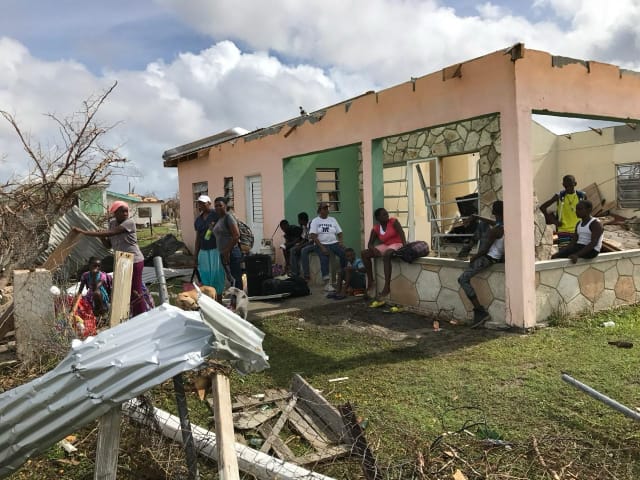
Hurricane Irma was a category 5 Atlantic Hurricane which caused destruction across the Antilles in early September 2017. Hurricane Maria stuck two weeks later. The photograph shows the island of Barbuda, whose population was mostly evacuated in the wake of Hurricane Irma. Photo: © Gulliver Johnson.
We hope this special issue speaks to the lived and living reality of climate breakdown and environmental precarity. We hope it also speaks to knowledge, care and activism out of which hopeful and creative responses are arising. The call for contributions to the Oral History Society’s 2027 conference on ‘Listening’ describes oral historians as ‘the ears of the world’. Let’s listen to each other – and let’s act.
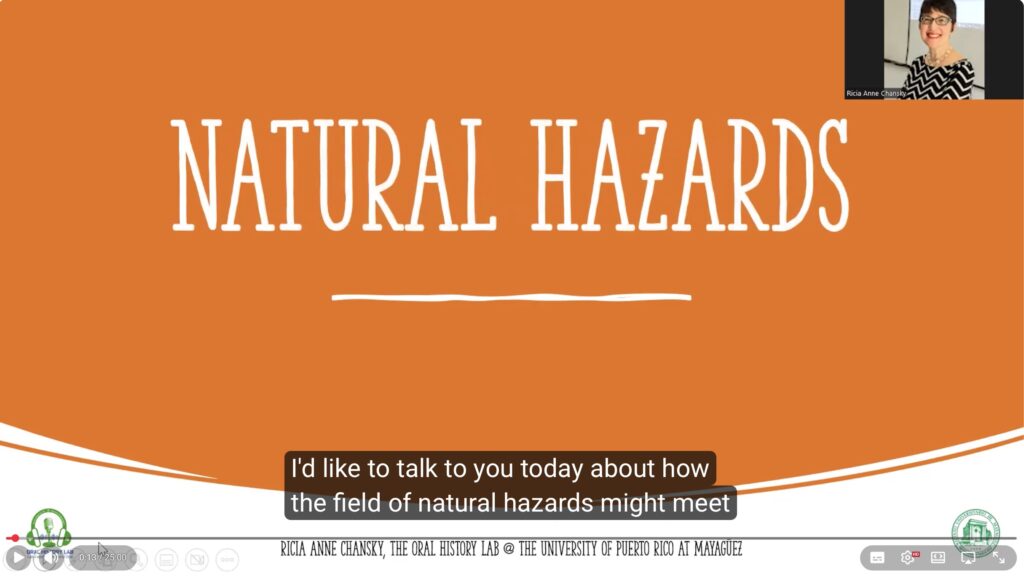
In this video, Ricia Chansky introduces her essay, “Eating in crisis: social capital and post-disaster food security,” which discusses a crisis oral history project focused on mutual aid organizations responding to food insecurity during stratified disasters. Ricia Anne Chansky is a Professor of English at the University of Puerto Rico at Mayagüez where she also directs their Oral History Lab, a process-oriented research hub focused on climate and social justice.