An Oral History Society Press and Journalism SIG blog post
There is no doubt that the local news industry has undergone profound change in the past 25 years. As esteemed academic Professor Bob Franklin has written, technological and structural changes have combined to change “virtually every aspect of the gathering, reporting and reception of news”.1 This is particularly true of the local newspaper industry where a seemingly endless parade of digital innovation has combined with an ever-shrinking revenue stream and fragmentation of audiences to restructure the landscape for the traditional weekly and daily provincial press.
Oral history has proved to be a valuable tool in documenting these changes, which facilitates a more nuanced engagement with the contemporary context for local news production. One example of this is in relation to changes to the quality control of news products. Contemporary commentators align the weakening of editing process with digitisation which enabled the creation of remote ‘subbing hubs’ to replace experienced, locally-based staff. More recently reporting and editing roles have combined in journalists who write straight to screen. Even more recently part of this process is now outsourced to AI platforms.
The subsequent decline in quality markers like accuracy in terms of spelling and local knowledge, and competent and creative layout can have a cumulative impact on readers; while they may forgive one mistake or badly-worded article, if errors persist, the result is dissatisfaction and a reduction in esteem and trust in the news producer.2
The qualitative evidence produced by a series of interviews with local newspaper workers details these changes. Drawing on living memory dating back to the 1950s, it also offers a longitudinal perspective. Working with colleagues and students in the history team at Coventry University, I conducted interviews with former editorial staff in Coventry. It focussed on five former workers with the regional daily newspaper, The Coventry Telegraph, and its sister publication, the Coventry Standard, and covered a timespan from the 1950s to the 2010. Interviewees included a journalist, subeditor, sports reporter, photographer and production worker. The interviews are now accessible via the History Centre in Coventry’s Herbert Museum, which also houses the newspaper archives for the city.
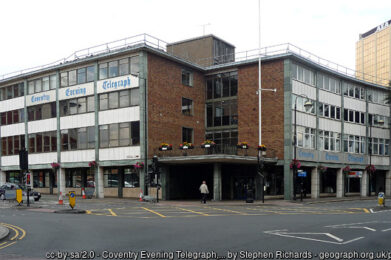
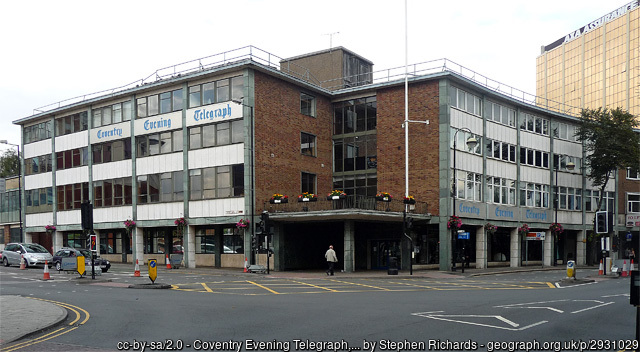
In its heyday the Coventry Evening Telegraph was a major regional daily newspaper, selling around 100,000 copies a day. Owned by the Iliffe family for much of its history, the newspaper occupied a large city centre in Corporation Street until moving to a smaller out-of-town base in 2012. The former newspaper building is now a hotel.
The oral history project brings a renewed focus to the era of ‘hot metal’ production and examined changes wrought by the introduction of computers to the newspaper production process, which happened largely in the 1980s, before extending to the consideration of the impact of producing online newspaper formats. Two of the interviews in particular demonstrate the layers of quality control which were built into the production process: those with Marshall Stewart, who started work at the Coventry Standard in the 1950s, and Richard Pearce, who worked as a sub-editor on the Coventry Telegraph (then the Coventry Evening Telegraph) in the 1970s and 1980s.
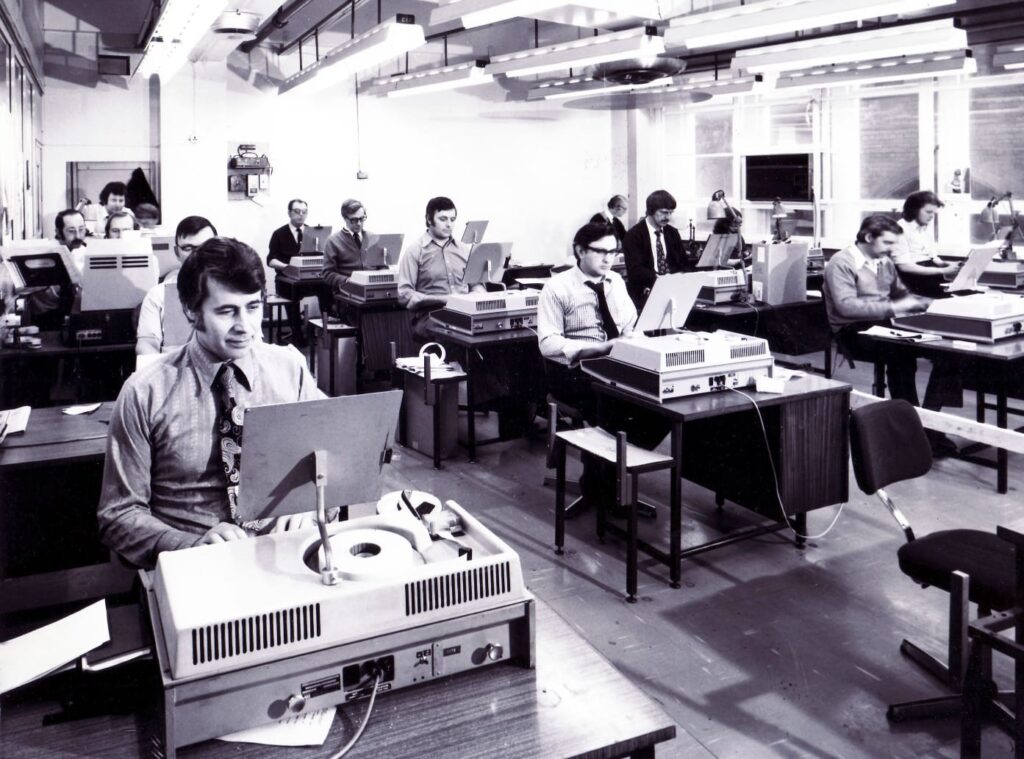
The interview with Marshall Stewart3, who started his career as a reader’s assistant, reveals the numerous layers of quality control which saw copy and pages going back and forth between various members of staff4 for repeated checking at different parts of the production process. This description is reinforced by the 1950 Kemsley Manual of Journalism, the training handbook for one of the major local newspaper owners, which placed responsibility for accuracy primarily with the sub-editor; their job included checking the spelling all names, the addresses of people and their titles and descriptions, drawing on a vast array of reference books.5 The sub-editor also had to contextualise the story in its own historical context, using cuttings and the newspaper library, and check for legal accuracy so as to preserve the reputation of the newspaper as a ‘faithful observer’ of life in the city.
Marshall, who went on the produce the flagship Radio 4 news programme Today, recalled: “The reader, for four days a week, read to me the original copy, and I looked at the proofs to see if there were any errors and every line of every printed word was read out, whether it was editorial or advertising… It was a very good grounding, because what it did remind you was that you needed to get everything, ever letter, every syllable, every word, every bit of grammar, every bit of fact right, and hammering that into me at that stage, when I began, of course lasted throughout my career.”
Echoing this emphasis on accuracy was Richard Pearce who worked at the Coventry Evening Telegraph as one of 36 sub-editors working across news, sports and features. He started in the hot metal era “literally learning by editing copy, estimating the amount of space it would take up in a newspaper, learning to spot the errors, and also to question reporters. You would be another line of defence before it reaches the public, so any queries, you’d go back to the reporters and say, ‘could you chase this up? Could you check this fact? Is that spelling correct?’”
Richard recalls how the role of reader disappeared – along with other job roles – with the introduction of computers. “Printers’ jobs but also other jobs such as proof-readers and people like that, where they literally sat down with two people reading every single line, ever full stop, ever comma … and every line and spelling was checked. That job went and it became the role of the sub-editor to check it. Whereas the sub-editor had formally written the headline, and that was set by the printers, with computers … all those roles were compressed into the sub-editor’s role.”
These oral history interviews serve multiple purposes; they evidence the changes internal to the legacy newspaper industry, which can go unseen to audiences. In doing so, they address the evidence gap which relates to the history of new work, particularly in local journalism. They also bring insight to the local newspaper as a historical resource by providing insight into the workings of the newspaper itself; this makes them of value to a wide variety of stakeholders who draw on local newspapers as evidence for research purposes.
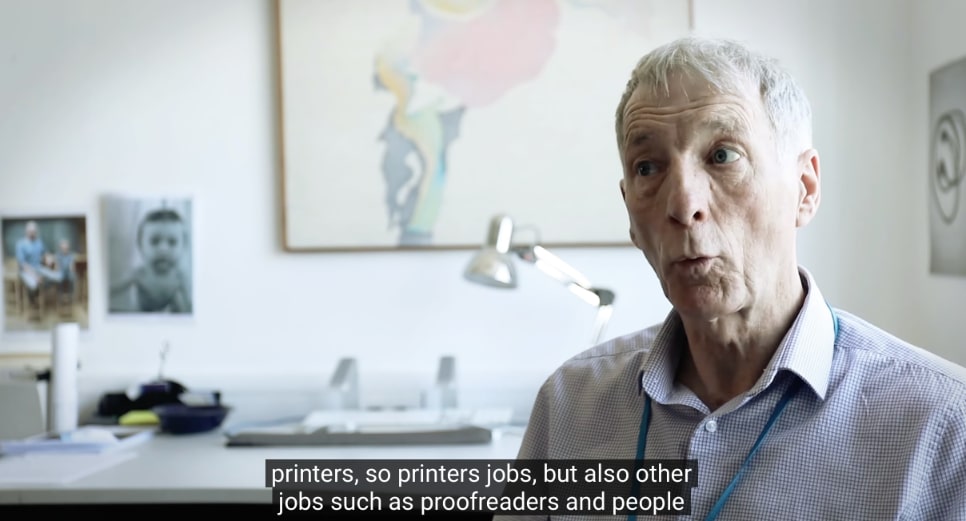
You can find out more about the Coventry oral history project via a short film which was made by the project team.
- Franklin, B (2012) ‘The Future of Journalism’, Journalism Practice 6:5-6. 595-613. ↩︎
- Vultee, F (2015) ‘Audience perceptions of editing quality’. Digital Journalism. 3:6. 832-849. ↩︎
- Marshall Stewart died in 2025 aged 88. We are grateful that we had the opportunity to record his memories of his career in Journalism. ↩︎
- This included the specific role of the reader – who checked proofs against original copy – as well as sub editors and editors. ↩︎
- Kemsley Newspapers (1950) The Kemsley Manual of Journalism. Cassell and Co Ltd. London, Toronto, Melbourne, Sydney and Wellington. P102. ↩︎