Stephen Kelly is a writer and broadcaster whose career in journalism started with the left-wing Tribune newspaper before he moved on to Granada Television and then into full-time writing. He has authored over 20 books on sport, politics and social history, most with a strong oral history element. His last book, How The Beatles Shook the World, was published by Pen & Sword in 2024. He also helped set up www.granadaland.org, which hosts the memories of over 100 former employees of the TV company. Stephen has written the following blog for the newly formed Press & Journalism Special Interest Group. We’re keen to hear and preserve more memories of local and regional journalism, from anyone who worked for such newspapers, and anyone who read them. If you have memories to share or would like to learn more about the Press and Journalism Special Interest Group, please contact Clare Jenkins.
There has always been something about local newspapers; the touch, the smell, the photographs and the stories. When I was growing up in Birkenhead in the 1950s and 60s, I devoured the pages of the Birkenhead News, catching up on all the latest gossip. And as I grew older it began to play a small part in my life.
The Birkenhead News and Advertiser was published on a Friday with a supplementary and slimmer edition on a Wednesday. At one point there had been two newspapers, but they had amalgamated, no doubt due to circulation and financial difficulties. The Friday edition was a must for most families, containing all you could wish to know about events in the town. There were cinema and theatre listings, death notices and obituaries, wedding listings with photographs of happy brides and grooms along with bridesmaids, council news, cricket and football reports, not just of Tranmere Rovers but for every amateur team that played in the town, photographs of Women’s institute events, school news and of course more general news. They even published our GCE results for everyone to see. I probably hid in the house for a week until it felt safe to go out!
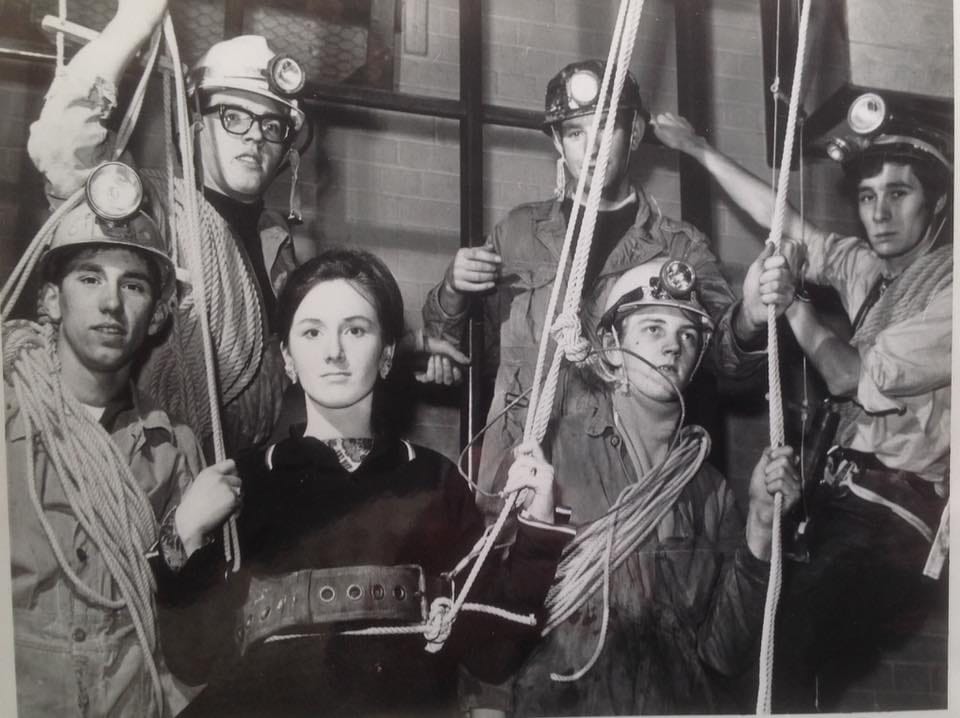
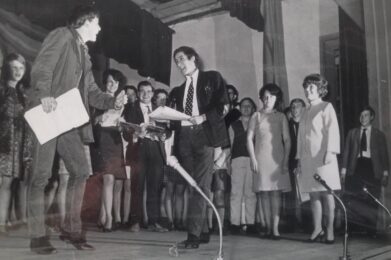
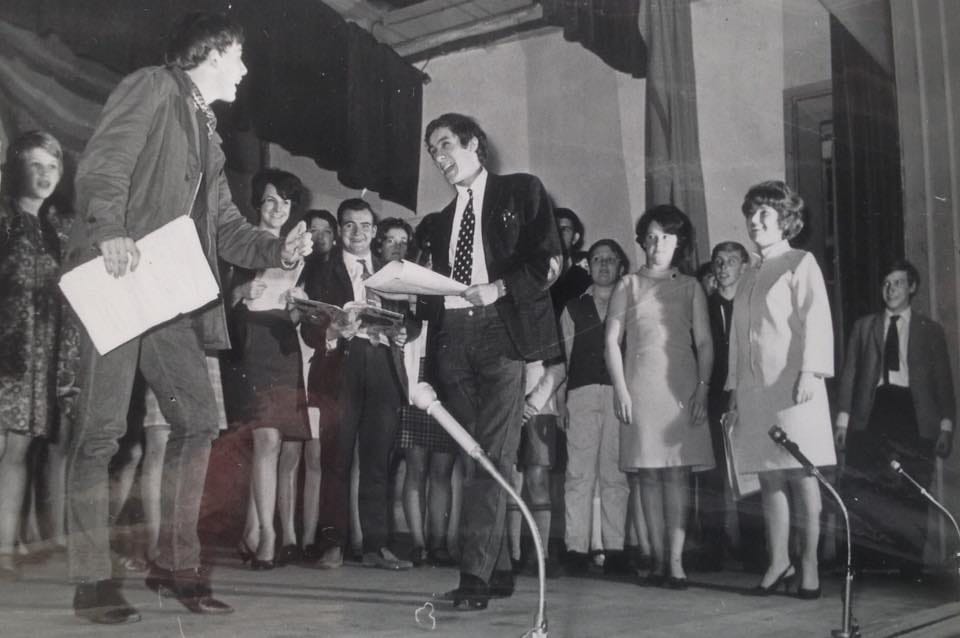
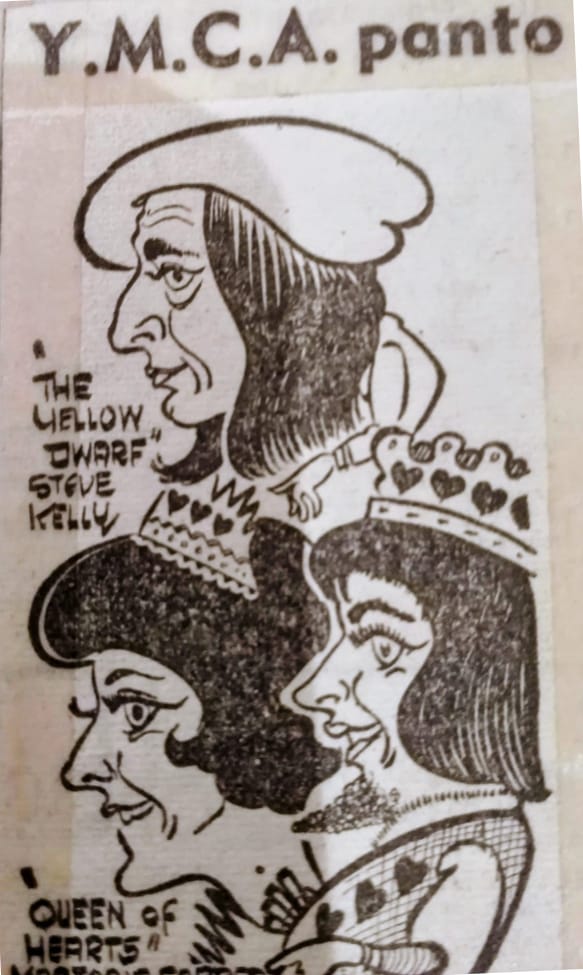
My first photograph in the paper was as a skinny teenager on a diving board at Livingstone Street baths about to take the plunge in some annual swimming gala. As the years went by there were more photographs of me, including meeting the Duchess of Kent at the YMCA and showing her the equipment that our potholing club used. And when I became active in the YMCA’s drama group, I was featured in Bernard Shaw’s Saint Joan, A Man for All Seasons, Antigone, and every Christmas in the annual pantomime. The paper even sent a cartoonist to draw caricatures of us as well as a photographer. I was the Yellow Dwarf in some pantomime or other, and the drawing of me appeared in the paper. I still have the paper cutting. My mother, of course, always cut any mention of me out of the paper and stuck it in a scrapbook. Years later, she herself featured in various YMCA women’s group events.
The paper was about community, featuring all its happenings and folks, from inconsequential events to serious issues. It was like a net pulling everyone in. I have no idea what its circulation was but in the 1950s and 60s you could not have survived without it. Today there is no such newspaper. It’s long gone. At first, it gave rise to a free, largely advertising-based paper delivered to most households. But even that has now disappeared. I have no idea where people get their local news from today. And for Birkenhead, read every large or small town in the country.
The Birkenhead News was also the first to publish any kind of written material by me. It was a letter I wrote to the paper in the early 1960s when I was about 16. The local Fire and Police Committee had banned the film Ulysses being shown to the innocents of Birkenhead, something to which I took offence. I doubt they had even seen the film, but banned it was and Outraged of Portland Street wrote into the paper to complain. And my letter was published. What’s more, the committee reconvened and relented. The film was shown. A small victory but it demonstrated that a local newspaper can have influence.
Every Saturday evening at about 6.15pm you’d hear a cry outside in the street. It was the newspaper man, delivering the Football Echo, the ‘Pink ‘un’ as it was known. He’d be walking up and down the streets, calling out ‘Football Echo! Football Echo!’ and I, along with various neighbours, would rush out of the house clutching my threepence or whatever. The ‘Pink ‘un’ gave us the first print of the football results and reports, along with other sports and football news. At one point in the 1990s I even had a column in the paper.
A good few years later when I was at University, I wrote a dissertation about poverty in Birkenhead during the inter-war years when there had been serious rioting. It was later published as a book. Researching it meant many hours spent in the local library diligently sifting through bound volumes of the Birkenhead News. And there in detail was a vivid picture of life in the 1930s and, in particular, lengthy detailed reports of council meetings and how they instituted the cruel Means Test which determined whether anyone unemployed could have any benefit, and the rioting that took hold of the town for three days and nights. I do wonder where today’s researchers looking for anything post-2000 will find their sources. With no local newspaper, that kind of research is considerably limited.
It was the same when I was writing books about Liverpool and Everton Football clubs. The Central Library in Liverpool became my home for days as I went back to the turn of the century to research the early years of both clubs. Newspapers have always been a source of information for all history researchers, but not anymore.
As for any kind of investigative journalism, that’s disappeared almost altogether. Even the regional newspapers like the Liverpool Echo and Manchester Evening News have largely disappeared. They might have a social media presence nowadays but getting past the plethora of adverts that hit you in the face is enough to put you off digging any further. And when you do, you’ll find the lead story is probably about how there’s a wonderful new, cheap dress at Marks and Spencers which is every woman’s dream bargain. News acting as an advert.
Thankfully there are signs of rebellion. In Manchester a group of keen young journalists have set up a social media paper called The Mill where you’ll find investigative journalism plus well written entertaining features. Liverpool has followed the same with a paper called The Post and in Sheffield there’s The Tribune. They exist with a small, dedicated staff who are continually in fear of being sued by some large corporation that will ultimately put them out of business. It’s in these large urban areas where a free press is most needed to out grassroots corruption. It’s a start and, with subscribers increasing all the time, there is clearly a market for real news. Hopefully others will follow suit.