Living Histories brings together oral history and mental health in an NHS context, exploring how people have experienced care, recovery, and change over time.
The project spans three decades, from the introduction of the 1990 Community Care Act through to the impact of the Covid-19 pandemic. It shares 37 oral histories, drawn from people with lived experience, clinicians, and those working across services.
The project is presented through a series of podcasts, created using excerpts from 37 recorded oral histories collected from 35 participants, alongside exhibitions and a website. At its core, Living Histories is about listening, carefully and ethically, to peoples lived experiences, and creating space for those stories to be heard in their own words around the subject of mental health, an area that carries stigma and trauma within it.
I joined the project as Heritage Project Manager in June 2024, working across Sussex Partnership NHS Foundation Trust and the NHS charity Heads On. My role combined oral history practice, cultural project management, and mental health social work, which shaped how I approached delivery – balancing creative practice with clinical governance, safeguarding, and ethical frameworks.
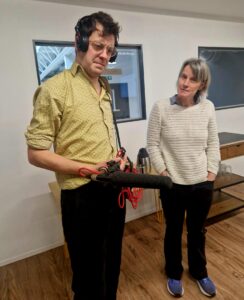
The project was funded by The National Lottery Heritage Fund and NHS Charities Together, and brought together a wide range of partners including clinicians, volunteers, artists, archivists, and freelancers. This breadth strengthened the work but also required careful coordination across different systems and ways of working.
Oral history proved to be a powerful method in this context. It allowed participants to speak in their own words, outside of clinical or institutional language. This is particularly important in mental health, where experiences are often shaped or filtered through diagnosis, paperwork, or professional interpretation.
The interviews captured a wide range of perspectives, including service users, clinicians, and others working within mental health services. Themes included diagnosis, treatment, recovery, stigma, relationships, and the impact of the Covid-19 pandemic. There was no single narrative – rather, multiple, overlapping stories that reflect the complexity of mental health experiences. Alongside difficult memories, many recordings also contained moments of resilience, humour, and unexpected positivity.
Delivering the project within an NHS Trust brought both opportunities and challenges. Governance processes, including ethical approval, data protection, and clinical oversight, were essential but time-consuming. These processes shaped the timeline and required careful navigation across multiple departments.

A key learning was the level of documentation required. Participants were asked to complete multiple consent forms across different organisations, which raised questions about accessibility and participant experience. While safeguarding and ethical practice are essential, there is a need to balance this with clarity and simplicity for those taking part.
Through consultation, I streamlined the documentation into a smaller number of key forms, while still meeting the requirements of the Trust and archive partners, including the Mass Observation Archive and West Sussex Record Office. This process highlighted the importance of designing consent processes that are both robust and accessible.
Volunteer involvement was central to the project. Volunteers were trained in oral history methods and played a vital role in supporting and conducting interviews. Their contribution strengthened both the delivery and the evaluation of the project.
One of the most significant aspects of the Living Histories project was the willingness of participants to share their stories. I am grateful to everyone who contributed, including service users, clinicians, volunteers, and creative collaborators. Their openness is what gives this work its depth and value.
The project resulted in a substantial archive of oral histories, along with podcasts and exhibitions that reflect the experiences shared. After the exhibitions, the recordings will be archived and sealed for 80 years, ensuring that these voices are preserved for future generations.
Key learning points:
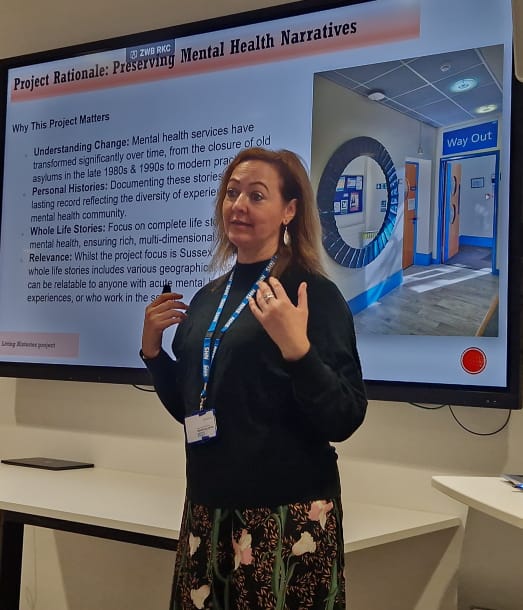
- NHS-based oral history projects require significant time for governance and ethical processes.
- Consent and safeguarding need careful design, particularly when working with vulnerable participants.
- Institutional requirements can create complexity that must be balanced with accessibility.
- Collaboration across sectors is effective but requires clear communication and realistic timelines.
- Building in more time from the outset is essential for projects of this nature.
Living Histories demonstrates the value of oral history in mental health contexts. It shows how listening to lived experience can deepen understanding, challenge assumptions, and create space for more nuanced perspectives on care and recovery.
The project can be accessed through exhibitions across Sussex and via the online platform, where the podcasts are available to listen to.