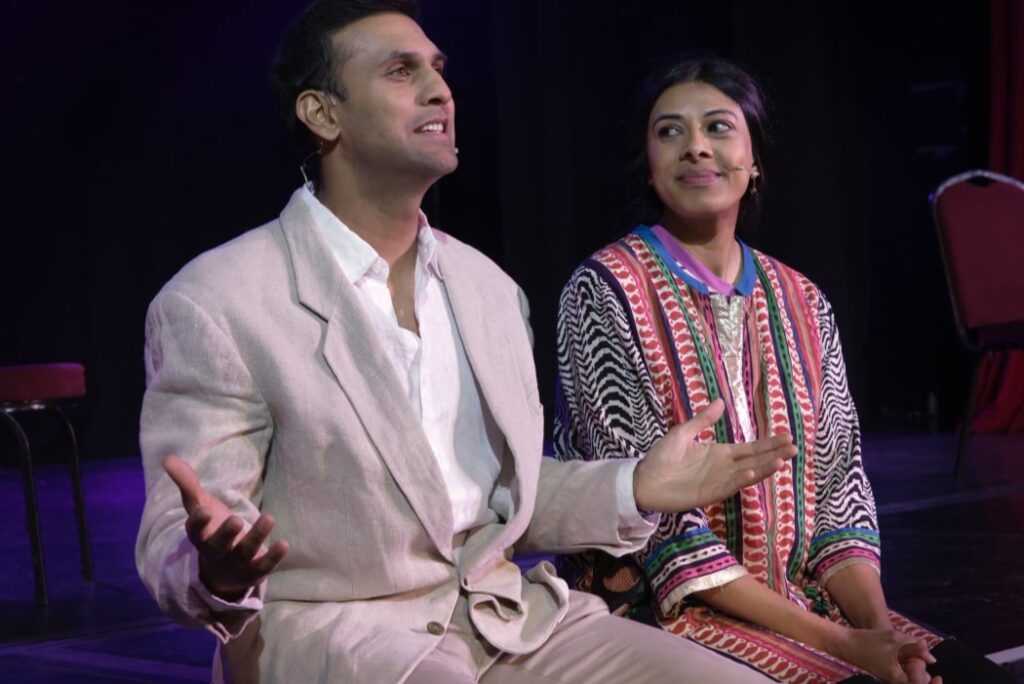
Who am I? – was the question posed at a recent theatre production by Mukul and Ghetto Tigers, inspired by the stories collected through the oral history project Who am I? – which explored identity and belonging among second-generation British Asians of East African heritage.
Thirteen video oral histories were recorded by oral historian and media producer Rolf Killius, working with community arts producer Lata Desai. They asked their interviewees about the ways their parents’ and grandparents’ histories continue to resonate today, as well as how they negotiate the legacies of colonialism and displacement in their own lives.
Supported by the National Lottery Heritage Fund, the project partnered with Mukul and Ghetto Tigers, an East London-based theatre and events company. Alongside the interviews, were workshops, talks and training for young volunteers, who developed heritage skills. At the heart of the project was the question, how do these young people define their own identity in Britain today?
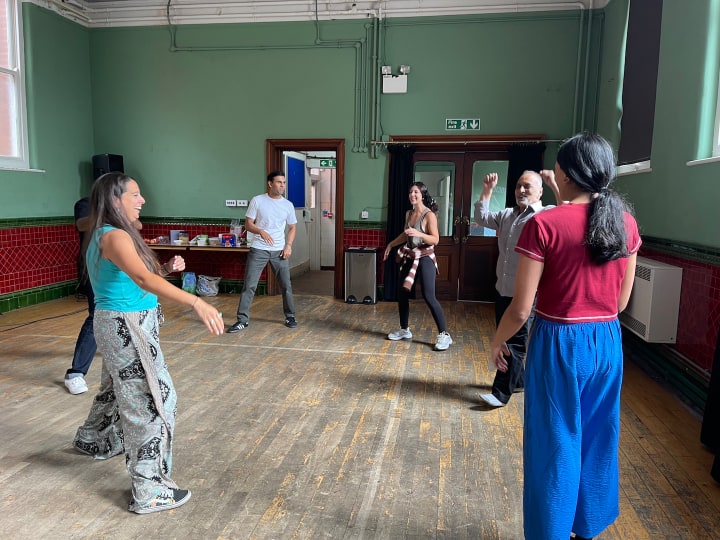
A ‘transcript to script’ process was used to transform the oral history interview material into new creative works. The project culminated in a joint theatre piece and audio play, written by Tarun Jasani and directed by Mukul Ahmed, staged at Stanley Arts, Croydon, and Crawley Library. Screenings of the oral history films and panel discussions offered further opportunities for dialogue and intergenerational exchange.
A personal reflection
The project had particular resonance for me. I attended one of the performances with three generations of my family: my mother-in-law and my husband, both Gujaratis born in Tanzania, and our mixed heritage daughter, born in the UK.

The play provided both a history lesson and a space for education and reflections. Amid moments of comedy and sadness, it explored experiences of migration, the challenges of settling and the search for acceptance. Wider issues surrounding the experiences of children of second-generation migrants were navigated through cultural references which showed how these children straddle two worlds, with parents who accused them of “Growing up to be foreigners,” while wider society often perceived them as ‘too brown’ to be fully British.
Underscoring these stories was the legacy of British colonialism, captured in the line: “We are here today, because you were there yesterday,” which struck a chord with many in the audience.
Institutional racism, societal ignorance and discrimination were further explored, as the performance interrogated the question of ‘Where are you from?’ – a seemingly simple inquiry, that many find othering. In today’s climate of identity politics and concerns over migrants arriving by boat, this dialogue felt particularly relevant and urgent.
Oral history in action
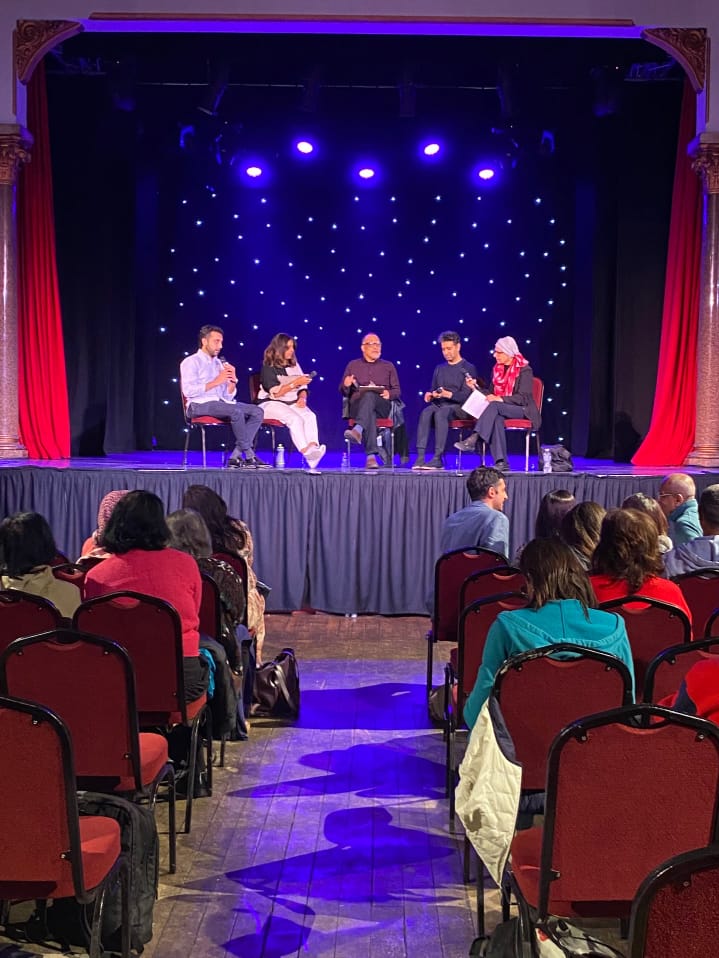
The performance and panel discussion which followed, was a positive example of how oral history, when combined with creative practice and collaborations, can spark wider dialogues, fresh interpretations and new understandings. The conversations in our car on the way home ranged from lively reminiscences to debates about immigration in contemporary Britain, three generations reflecting from different vantage points.
The interviews underpinning the play also revealed the complexity of layered identities. As interviewee Saaj Raja reflected:
“A large part of our identity is made up by this Gujarati heritage, which has travelled from continent to continent and must be preserved and protected. I think every generation has to break ceilings and break obstacles. For my grandparents’ generation, that was caste-ism. For my parents’ generation, it was creating economic prosperity and success in a country set up institutionally for them not to succeed. And now my responsibility is to tell the stories of the past and the present, to exercise the demons of those experiences. I have a unique opportunity to shed the shame through my work as an artist.”
This sense of responsibility – of carrying memory forward, was echoed by Raul Lai:
“I am the multicultural, diverse, inclusive Britain that we’ve become, and part of that is drawing on all of my family backgrounds and heritages to create me. I take strength from each of my cultural heritages to create myself. And I think that is innately British.”
These testimonies bring to life the project’s central question: how do we make sense of belonging, when our histories stretch across continents, faiths and generations?
Placed alongside initiatives such as the British Library’s Asian Voices and UK South Asian Digital Archive (UKSADA), Who am I? underlines the continuing importance of recording second- and third-generation perspectives, showing how identity and belonging are renegotiated across time and place.
Why stories matter
At its core, Who am I? demonstrates the power of oral history to connect memory, identity and creativity. It shows that when stories are shared, whether on stage, in archives, or in community discussions, they become catalysts for understanding across generations and to the wider public. As the evening concluded, one statement lingered in my mind: ‘If you tell stories you are becoming an activist.’
Now, more than ever, we need to tell stories and we need to listen.