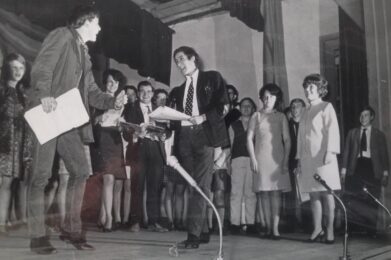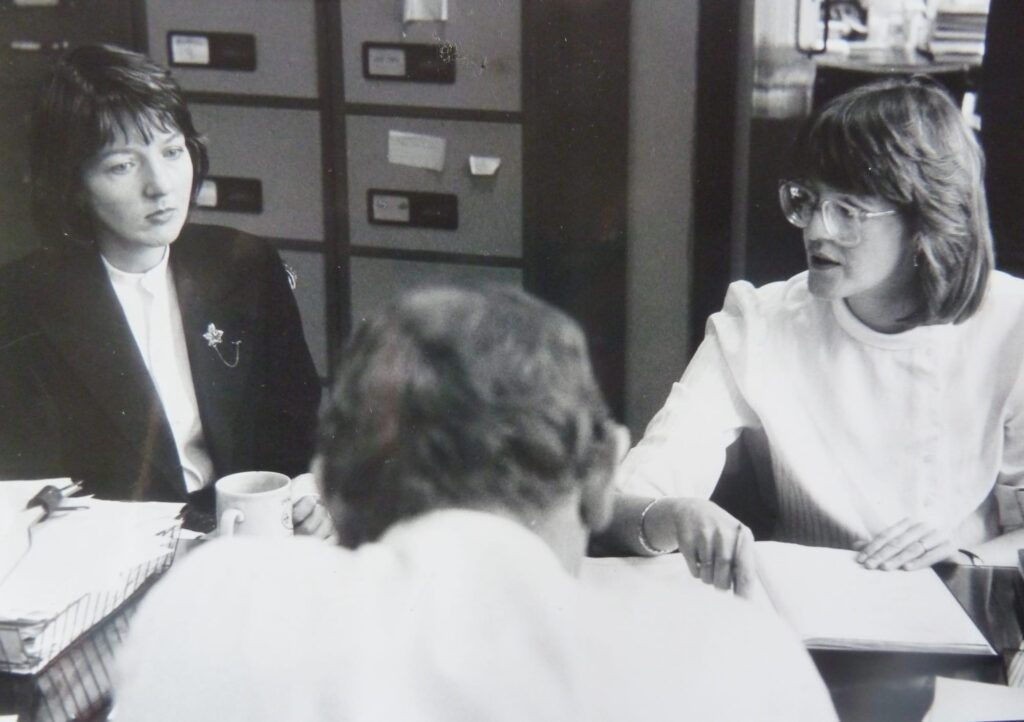
Featured image: Clare Jenkins (features editor), editor Peter Darling, and news editor Julie Lockwood at the final conference of the Sheffield Morning Telegraph, February 1986. Photographer: Stephen McClarence
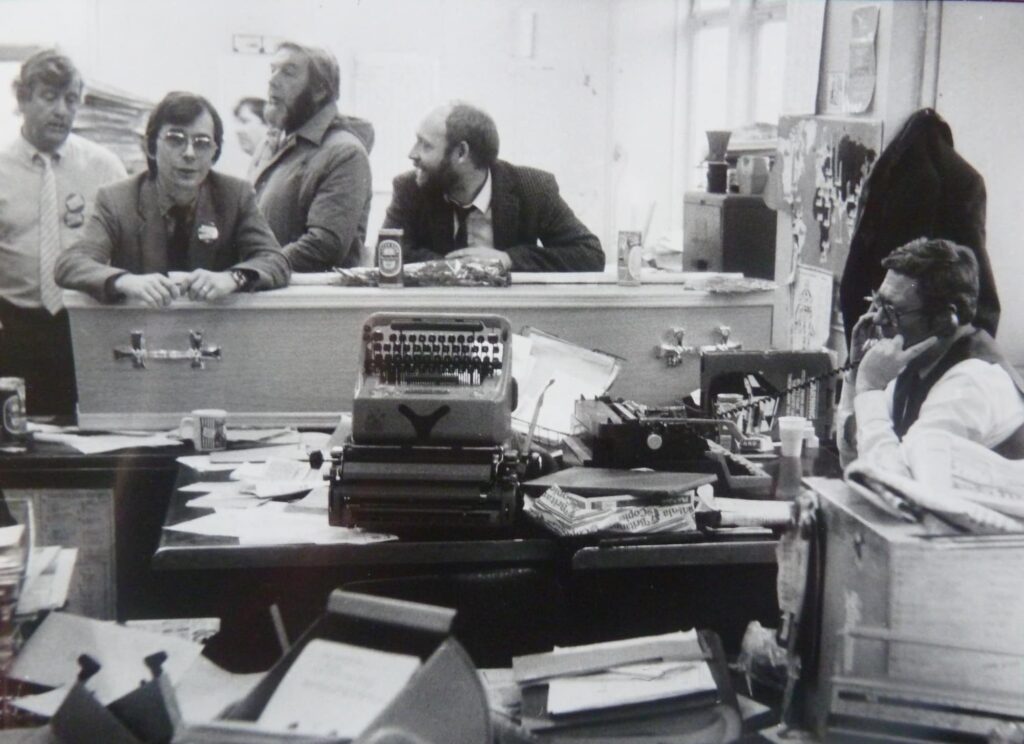
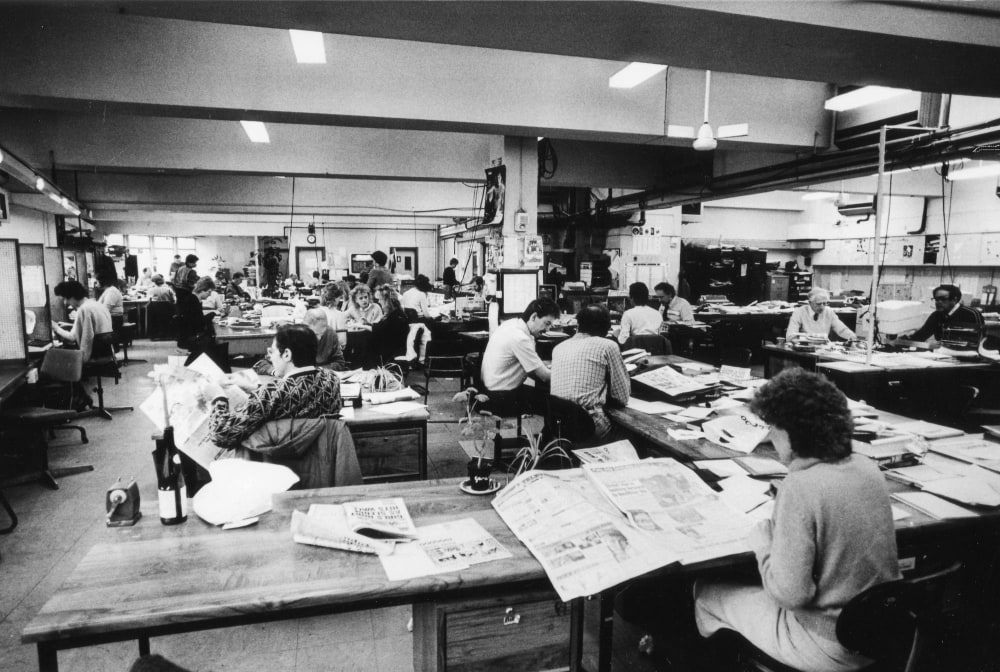
When I started working at the Sheffield Star in the early 1980s, the newsroom – based in the same city centre building since 1916 – was full of people, clattering typewriters and cigarette smoke. There were around 120 journalists and photographers working on the evening Star and its sister paper, the Morning Telegraph. News reporters, sports reporters, feature writers and sub-editors shared the newsroom with a dozen or so secretaries and copytakers. The copytakers sat with their backs to us, in booths facing the grimy windows, as they typed up stories, reviews and match reports being phoned in by journalists.
Upstairs were the accounts and advertising departments; downstairs, the front desk, with staff taking announcements of births, marriages and deaths, and dealing with readers’ queries, including requests to tell their story to a reporter. Down in the basement was the printing room, which as one journalist said, “was so exciting – the building sort of juddered when the presses started up for the first edition. I always thought that was the most exciting moment of the day.”
That printing press is now 15 miles away, between Rotherham and Worksop. The rest of the Star and Telegraph building – what one journalist called “a cathedral to journalism” – has been turned into city centre apartments. The newspaper office now is a shared ‘hub’: an anonymous block occupied by just a dozen journalists – when they’re not working from home.
The Star’s print circulation itself has plummeted from 105,000 copies in 2011 to fewer than 4,000 today. The weekly Sheffield Telegraph, which no longer has any designated staff, sells around 2,000 copies.
Today’s reporters, far from chasing ambulances, attending court and council meetings, downing pints with councillors and off-duty police officers, are glued to Twitter feeds, Facebook and Snapchat sites. They’re multimedia experts, whose daily tasks involve trawling social media sites for potential stories and cut-and-paste quotes, data journalism, the creation of TikTok videos or vox pop videos (a rare chance to actually meet people) for the newspaper’s website or Facebook page, plus the occasional podcast.
These changes have, of course, happened throughout the UK – as well as globally. I gradually became aware of them when I was teaching journalism students at Sheffield Hallam University. It seemed increasingly irrelevant to talk to them about contacts books, the value of shorthand, the importance of scouring noticeboards for potential stories, when the reality of the newspaper workplace was so very different from the ones I’d inhabited, both in Sheffield and on the weekly Newark Advertiser, my first newspaper.
When I left Hallam just before the pandemic, I had time to reflect on those changes. And I realised how vital it was to record journalists’ memories for posterity – before newspapers disappear altogether.
The result has, to date, been interviews with 25 Sheffield journalists, ranging in age from 22 to 90. Older ones remember a world of police calls, ambulance-chasing, weddings and funerals, council meetings and courts, Mavis the tea lady, daily columnists, specialist reporters, street newspaper sellers, the Battle of Orgreave and the Hillsborough tragedy. A world where local newspapers were at the very heart of their community.
Younger ones have a very different perspective. One trainee reporter, skilled in the world of clickbait, told me: “If you look at our view figures, last month my five top stories include ‘10 top restaurants shortlisted for national award’, and the other four were property stories about houses. They got around 10,000 page views. When I did an interview with a woman who’d been abused during the Rotherham grooming scandal, that got just 861 views. So people may tell us they want serious journalism but, when we do that, they don’t look at it.”
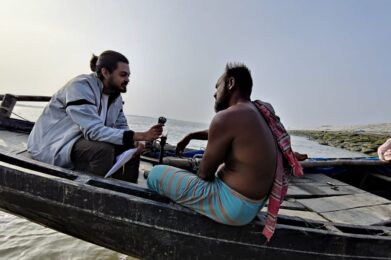
Earlier this year, I joined forces with two other journalists and oral historians – Dr Rachel Matthews, author of The History of the Provincial Press in England, and BBC broadcaster and trainer Julia Paul – to explore ways in which we can expand the project nationally.
That’s why we’ve set up the Press and Journalism Special Interest Group: to see who else there is within the OHS network who has knowledge or experience, in whatever capacity, of local and regional newspapers. Maybe they could conduct similar oral histories in their own area – not just with reporters and photographers but with anyone who worked for their local newspaper.
They may have photos or other memorabilia which we could add to our collection, which we plan to store in local archives, with some of the longer interviews going to the British Library National Life Stories collection. In addition, Rachel has created a network of archivists and community groups to preserve at-risk local newspaper archives (see https://www.linkedin.com/company/preserving-the-local-newspaper-archive).
Anyone interested in finding out more can contact: [email protected]