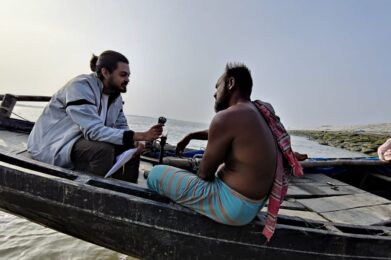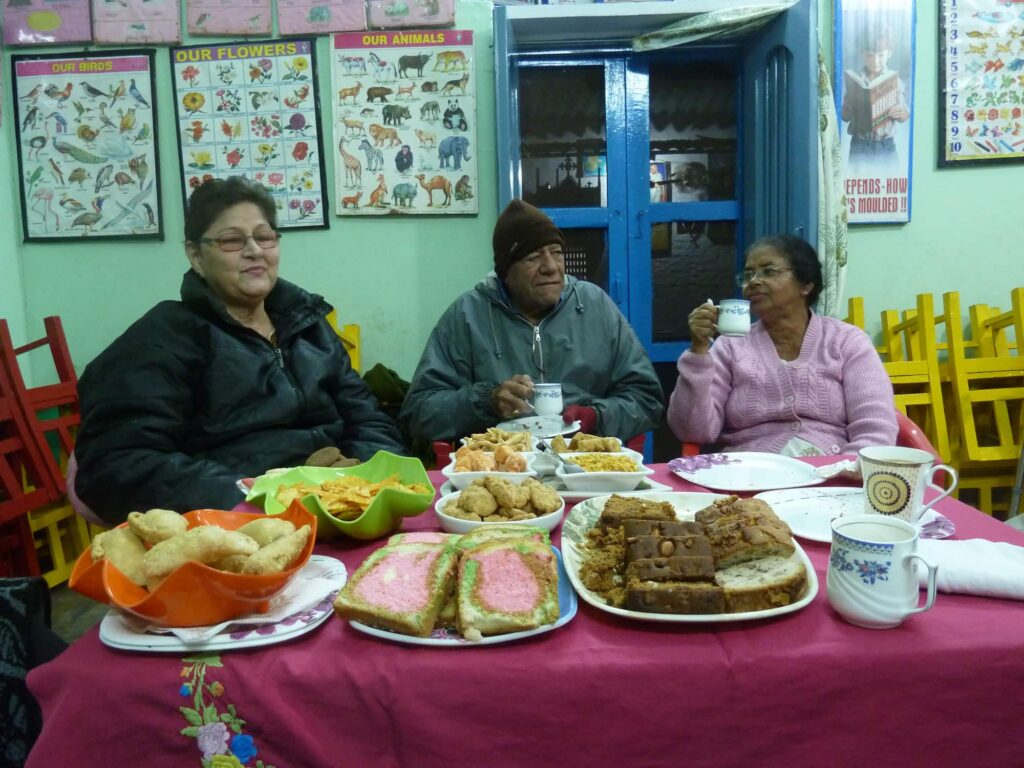
At the tail-end of 2014, I was recording interviews for a BBC Radio 4 programme about the fast-dwindling Anglo-Indian community in Jhansi, a large railway town in central India. The half-hour programme, called Teatime at Peggy’s – https://www.bbc.co.uk/programmes/b05tpwc7 – centred on Peggy Cantem, the octogenarian president of the Jhansi branch of the Anglo-Indian Association.
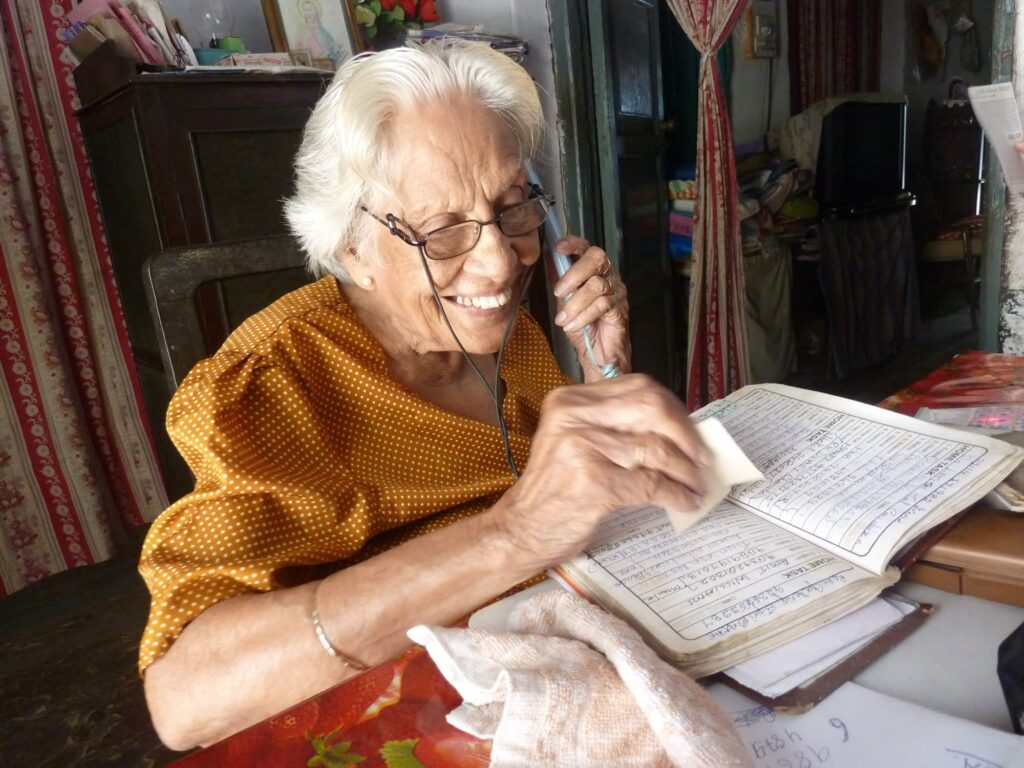
During regular visits to Jhansi over the previous decade, I’d recorded Peggy and her friends as they talked about their lives both under the British (they’re descendants of British or European men and Indian women) and after Partition in 1947.
On this last trip, I’d conducted more in-depth interviews and, on New Year’s Eve, decided to check they were all saved on my Marantz recorder. Disaster: the machine started deleting the tracks, one by one. No matter what button I pressed, I couldn’t stop it. In desperation, I wrenched open the back of the machine and yanked out the batteries. My husband said he’d never seen anyone actually go ashen before.
I rang my studio manager, Mike Thornton, in Lancashire and explained. After a long pause, he calmly told me to save the SIM card, insert another one, and redo whatever interviews I could. He said he’d try and retrieve the original audio when I got home – which, being a superb technician, he did.
When the programme finally aired in May 2015, critics said they were captivated by what they heard, calling it ‘vividly evocative’ and saying it ‘catches something of the special atmosphere of a culture and way of life that are fast disappearing’. No-one would have guessed that some of the interviews were retakes…
Under the British, Anglo-Indians held favoured positions in India, working on the railways and in the Post & Telecommunications departments. After 1947, many left for other countries, including the UK. Their numbers in India have declined so significantly – to around 150,000 – they are now designated a Minority Caste.
A couple of years before Teatime at Peggy’s, I’d made a Woman’s Hour feature about Anglo-Indian women, again with Peggy at its core. Despite her age, she was still incredibly active, working as an unofficial charity and social worker and as custodian of the large European cemetery, with its 1857 Mutiny graves.
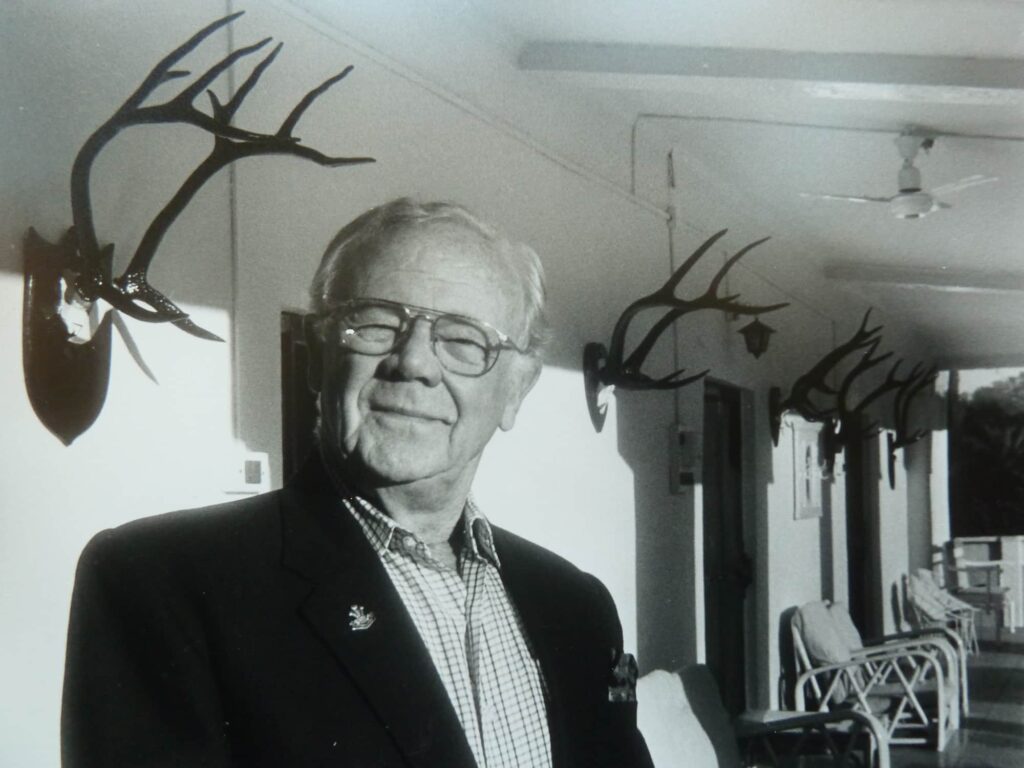
My husband, Stephen McClarence, and I first met her in 2004. Four years earlier, Steve – a travel writer for The Times and Telegraph – had been on a Press trip to Jhansi when, by chance, he met Captain Roy Abbott, possibly the last British landowner in the country.
‘More British than the Brits’, as one programme reviewer called him, the Captain lived in an immaculate bungalow, dressed like a Rotarian in blazer and cravat, and was a stickler for discipline. He and Steve struck up a friendship so, over the next three years, we visited him both in Jhansi and on his farm in the neighbouring state of Madhya Pradesh.
Through him we met Peggy, and then spent hours in her ground-floor flat, drinking tea, eating plum cake, and meeting a colourful cast of characters. It often felt as though we had fallen ‘down the rabbit hole’ in Alice in Wonderland and found ourselves at the Mad Hatter’s tea party.
Steve would take notes and photos while I recorded, both of us amused and dazzled by the constant ringing of phones, the stream of unexpected guests, the wide-ranging chitter-chatter.
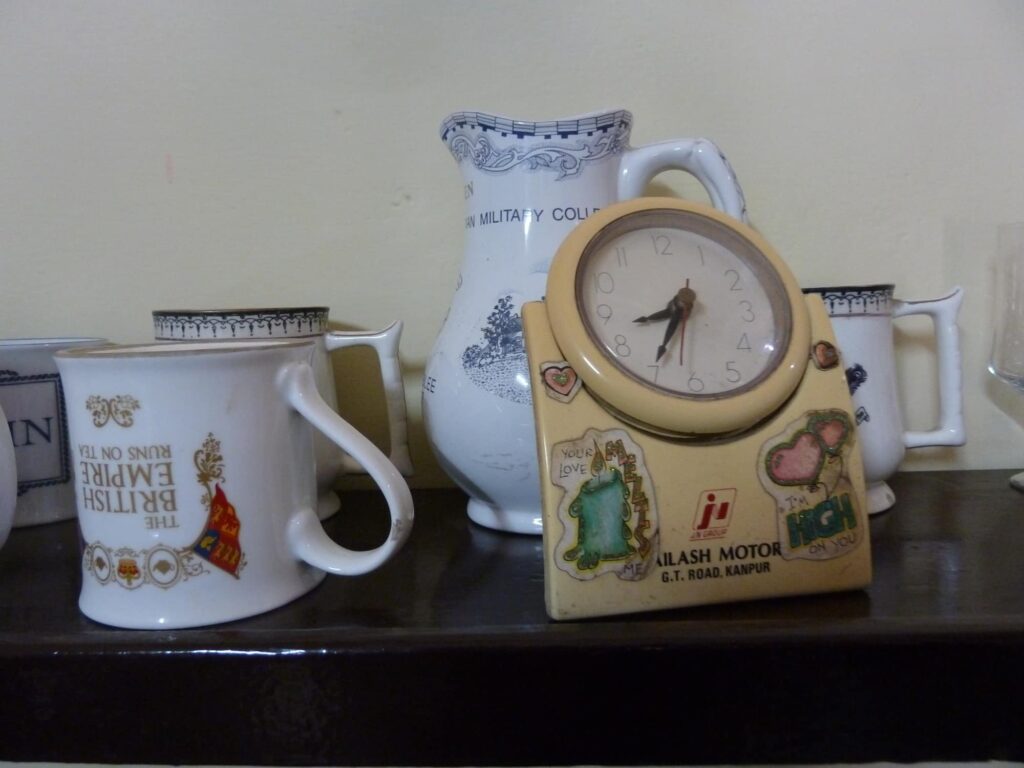
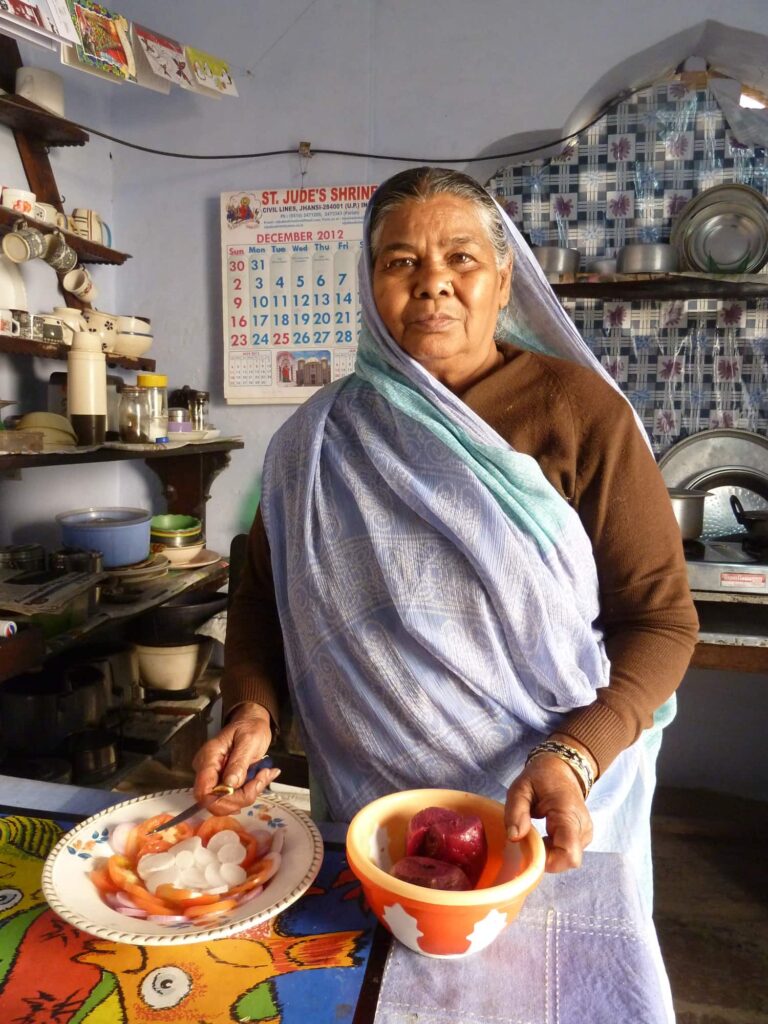
We were intrigued by everything that felt ‘similar but different’ about the Anglo-Indian lifestyle. At Peggy’s, for instance, we would sit at a table covered by a 1960s floral tablecloth while her cook Sheela Chauhan made wonderful curries at the two-ring gas hob. Tea-towels showing English country scenes were pinned on the walls beside calendars from the nearby Shrine of St Jude. Western and Indian statuettes gazed at each other across rickety shelves.
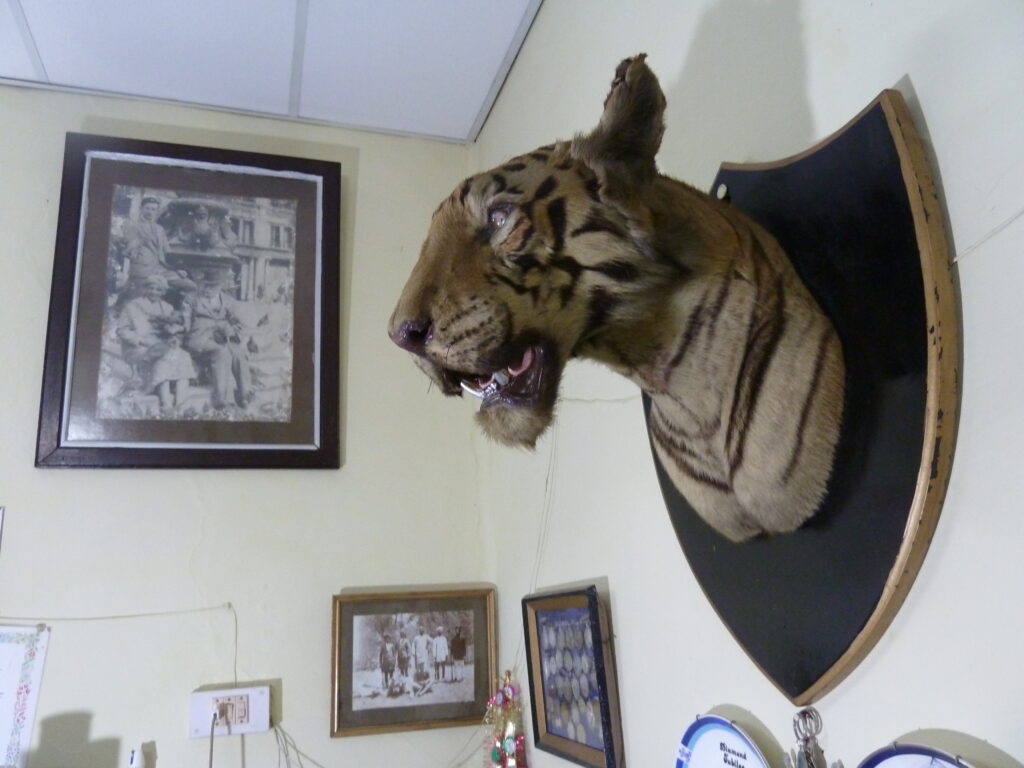
In another Anglo-Indian home, the living-room had Pre-Raphaelite prints on the walls, Capodimonte figurines on the shelves, and a TV cloth cover depicting Buckingham Palace. In a third house, plaster flying ducks flew towards a stuffed tiger’s head on the wall. “A little of English, a little of Indian,” as Peggy said.
“I am very patriotic,” she told us. “I cherish the Royal Family. The Queen was born on the same day as me. I used to collect all souvenirs of Britain – plates, little cups, a whole set of the different counties in England – Kent, Derbyshire… It’s something we should keep in touch with.”
Other memories of “the good old days”, as she invariably called them, involved May Queen balls (Anglo-Indian women were famed for their beauty), Monsoon Toad Balls (to find ‘the most hideous-looking man’), pet mongooses and meals of Mulligatawny soup, toad-in-the-hole and ‘railway lamb curry’.
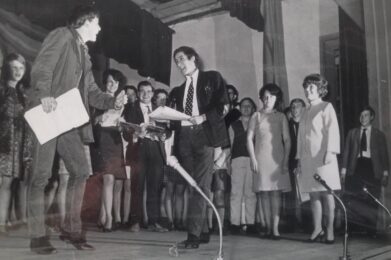
At the old Railway Institute in Jhansi, people used to gather for card games, parties, sports and, crucially, dances. “We used to have fabulous dances,” she told us. “Rumba, samba, a little waltzing, a little foxtrotting, and a ‘twilight waltz’, with the lights turned off!”
She also painted a wonderful verbal picture of groups of young people driving into the jungle at the nearby deserted medieval town of Orchha, laden with a wind-up gramophone and dance records. “We would pack up our own eats – pilau, some sandwiches, a bottle of squash or lime juice. We’d have moonlight picnics by the riverside, and dancing sessions. We had all the latest hit records. Victor Silvester and Benny Goodman – all the jazz musicians we had. Joe Loss – we liked Chattanooga Choo Choo – and country and western, Jimmie Rodgers and all those good old-timers.”
During the pandemic, Steve and I realised that, what with his stack of journals and my hours of recordings, we had enough material for a book. The result is Teatime at Peggy’s: A Glimpse of Anglo-India: https://www.bradtguides.com/product/teatime-at-peggys/
We were often told by Peggy and her friends that the community was dying out. In Jhansi – said to be the inspiration for John Masters’s classic 1950s novel Bhowani Junction – it’s now down to just 30 families. And as Peggy, Roy Abbott, Peggy’s maid May, her friends Dev and Antoinette have all since died, their memories could have died with them.
Instead, we hope our book captures at least a flavour of the extraordinary world of India’s Anglo-Indians.
All photos by Stephen McClarence
Teatime at Peggy’s: A Glimpse of Anglo-India, by Stephen McClarence & Clare Jenkins, is published by Bradt Travel Guides (Journey Books) on 7th June 2024, price £9.99 paperback + e-book edition to follow: https://bit.ly/48h6jFw