Nostalgia sits at the heart of oral history. Since the method gained popularity in the 1960s and 1970s, critics have questioned the reliability of recollection, pointing to confusion, distortion, and subjectivity. Nostalgia, in particular, is often seen as a hindrance. It can soften the past, blur chronology, or mythologise history. I conducted 52 oral history interviews with people who lived in Bradford in the 1970s and 1980s for my PhD research. Rather than treating nostalgia as a flaw to correct, I approached it as a historically situated practice – a way people made sense of change, loss, and belonging in Bradford. Three examples below show how nostalgia worked in practice.
Nostalgia as emotional evidence
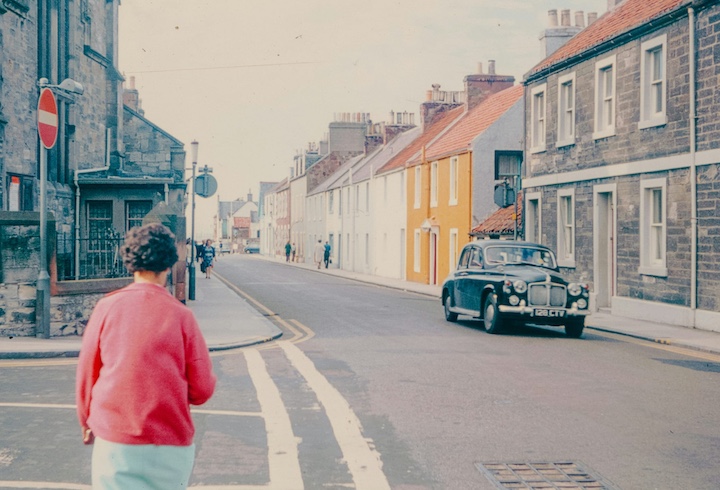
Memories of “playing out” on childhood streets were among the most consistently nostalgic accounts. Interviewees recalled long days spent running between houses, parents keeping informal watch, and streets that felt safe and familiar. Pamela remembered how “mums fed and juiced hot kids during mad races up and down the street in hot summers”. Christine described playing rounders at a crossroads that would now be “unthinkable” because of traffic.
Interviewees contrasted the streets of their childhood with those of today: busier, louder, and more dangerous. Some framed their own upbringing as a “better” or more “innocent” childhood. Yet this nostalgia was not naïve. Several people acknowledged serious dangers, including violence experienced by peers while “playing out”. As Christa reflected, “I’m not sure that times were less dangerous, I just think we didn’t hear about it”.
What mattered was not whether the street was objectively safe, but that it felt safe; a feeling preserved by nostalgia. Read this way, nostalgia becomes evidence of experience, not an obstacle to it. It also helps to explain the present: as everyday interactions lessened, so too did the sense of community and familiarity attached to childhood streets.
Nostalgia as temporal framing
Nostalgia also shaped how people organised time in their narratives. Accounts of Bradford’s nightlife and music venues were frequently framed as a distinct, bounded period of life. Leonard described the explosion of two-tone music in 1979 as a “golden window” that arrived “just at the right time”. It followed years marked by strikes, racism, and political tension, and it coincided with his coming of age.
For Leonard, the warmth of his memories extended beyond nightlife to the period as a whole. He described how he looks back fondly not only on the music and venues, but “even the TV adverts”. Importantly, this nostalgia was not just personal. Leonard spoke in terms of a collective “we”, situating his identity within a group who shared his love of two-tone and the dancefloor. After this brief period, the “posse started to dwindle”, as his friends started “getting girlfriends or they started a job”.
Here, nostalgia works as a way of framing time. Short-lived places and fragile social connections were retrospectively stabilised, becoming a meaningful “golden window”. Nostalgia grants these fleeting experiences durability, allowing interviewees to build coherent life narratives that were remembered and narrated in the oral history process.
Nostalgia as defiance
Nostalgia also functioned as a form of defiance, particularly in response to Bradford’s negative public reputation. Several interviewees reflected on how external portrayals of the city shaped their sense of identity, often producing a defensive attachment to Bradford in the present. Remembering the past nostalgically became one way of pushing back against stigma.
Nostalgic remembering often came from interviewees who were particularly vocal or proud about their Bradfordian identity. Nicholas explained that he now deliberately emphasises where he is from in conversation, anticipating dismissive or racialised reactions and countering them directly. Jo, too, spoke of “getting quite defensive” when Bradford was mentioned.
Here, nostalgia allows people to hold onto experiences of belonging that sit alongside, and sometimes in opposition to, dominant representations. In this way, nostalgic remembering becomes a means of asserting value, pride, and attachment in the face of external judgement.
Beyond distortion
Taken together, these examples show that nostalgia is not simply a distortion of the past, but a way people make sense of experience. In these interviews, nostalgia preserved emotional truths, shaped how time was remembered, and enabled people to defend places they cared about against stigma and misrepresentation.
Listening seriously to nostalgia does not mean taking it at face value. It means recognising it as a historically situated practice, one through which people interpret loss, continuity, and their place in the world. When approached this way, nostalgia does not lead us away from history, but deeper into the meanings people attach to their lives and the places they call home.