(A script for an unrecorded podcast)
Narrator:
Special Interest Groups were launched by the Oral History Society in 2015, and celebrated their 10th anniversary last year. Their origins lie somewhat deeper, though, and their development – which is ongoing – is an evolving adventure. One of those still-developing adventures has been the coming together of SIGs in 2024-2025 into a Council of SIGs. Another has been the furcation of groups of, by, and for members in the form of the Society’s first Discussion Group, “Disability and Neurodivergence”, which kicked off in 2025.
This blog series has come about because the Council of SIGs took the decision at their recent November meeting to share their stories and adventures on the Society’s newly re-created and re-launched website. The aim is for each of the SIGs to take it in turn to create a monthly blog, and it made sense, in this context, for the current SIG Facilitators to set the stage and take the first plunge. In this initial Blog from the SIGs they discuss the early origins of Special Interest Groups.
Note: “The Committee” is a reference to the Trustees of the Oral History Society, not the famous 1960s improvisational comedy group which gave George Lucas and Star Wars the word “Wookiees”.
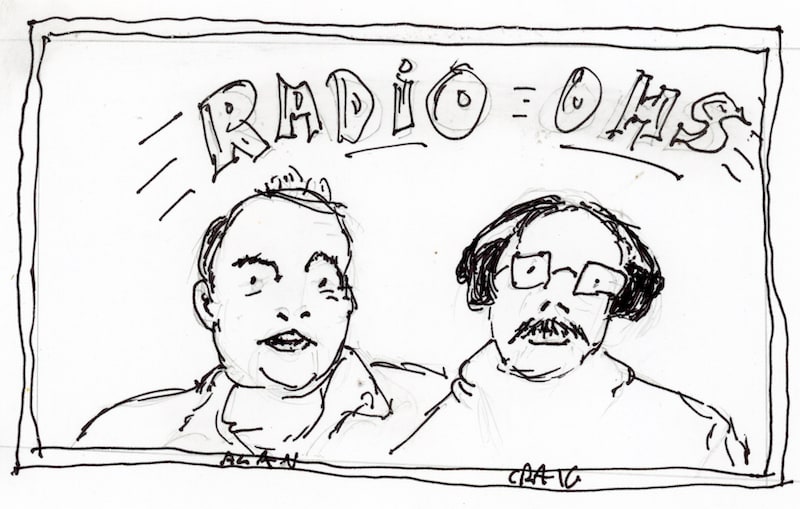
Alan Butler: Craig, you kind of shepherded Special Interest Groups into existence. How did it all begin?
Craig Fees: When did you become a SIG Facilitator, Al?
Alan: 2021. Not many years after the role of SIG Facilitator was created, back in December 2019, when you stepped into the role. So how did we get from zero members’ groups in the 2010s to needing a special SIGs’ Facilitator’s role in 2019, and then to today, 2026, when we have seven special interest and one discussion group? And two SIG Facilitators?
Craig: When we could really use at least three! To begin with, I’ve been a member of the OHS Committee since 2004 (Alan: ‘2021 for me’). I spent a lot of the early years lost and wondering what contribution I could make, which was not unusual for new members of the Committee in those days. You were plunged into a kind of family gathering, where everybody seemed to know everybody, conversations carried over from generations previously, and everything could go over your head pretty quickly. I survived a very strong impulse to resign as being useless. That passed, mostly, but it left a keen imprint. And what an interesting and dynamic family it was.
I was invited to join the Committee after hosting and facilitating the 2004 Strategic Review, which Graham Smith and Donald Hyslop had insisted upon in becoming the new Chair and Vice-Chair of the Society. Everything was up for review, from governance to membership.
Alan: Where was that? Where did you host the Review?
Craig: That was in Toddington, Gloucestershire, at the archive I was responsible for, which had meeting rooms and onsite accommodation, in really nice grounds. I went on to host the Reviews of 2009 and 2013, and almost got to welcome people again in 2018, but the charity I worked for had decided to wind itself up, and in 2017, when planning for the Away Day was under way, I couldn’t guarantee that we would still be there the following year.
The Reviews, or Away Days, were residential. The one in 2009 took place in February and coincided with a heavy snowfall, which made some things challenging, but I think could be recommended from a camaraderie and minds-to-the-grindstone point of view. We came out of this period of Reviews as a formally declared campaigning organisation, with a focus on diversifying and increasing the Society’s membership, and finding ways of serving/supporting the diversity of members’ interests and bringing them closer into the work and governance of the Society.
Alan: Member engagement, and member involvement.
Craig: Precisely. A work in progress which forms a foundation for the idea of interest groups.
And then I lost focus during a Committee meeting in 2011 and found myself volunteering to organise the 2012 annual international conference in concert with Padmini Broomfield – as we talk I can see Padmini saying “Yes” at the far end of the table in the Panizzi Room at the British Library – and Wendy Ugolini and Michelle Winslow, for the Society. Padmini and I went to visit Martin Parsons at Reading University, and he came on board as the Director of Reading’s Research Centre for Evacuee and War Child Studies, which made sense, as the theme of the conference was “Displaced Childhoods: Oral History and Traumatic Experiences”. I mustn’t lose focus now, but this conference – which almost didn’t happen – effectively became the cauldron from which Special Interest Groups emerged. There was a conversation among a small group of oral historians, psychiatrists, social workers, and psychotherapists, which began in the lead-up to the conference, and which we really wanted to carry on afterwards. Unfortunately, the Society had no off-the-shelf mechanism to support and facilitate such groups, and by the time it did, that initiative had largely evaporated.
Alan: That’s unfortunate. But why didn’t the conference almost happen?
Craig: Gosh. There were several reasons, some of which I won’t discuss, but it was mainly financial. Universities, or some universities, were entering into that phase of changing their pricing for facilities which put enormous risk on the organising group to produce guaranteed numbers, without taking any risk themselves, and without giving much if any concessions for staff or departmental involvement. Reading had made that transition, and made no concession for our collaboration with Martin and his Research Centre, and priced itself out. I had a final call with the Reading folks on this while waiting for a connecting train to London to meet with the Officers of the Committee at the British Library, to give reasons why they shouldn’t pull the plug then and there on what was heading to be a financial disaster for the Society. This was pretty daunting, like being a child called into a room full of adults in the headmaster’s study. Fortunately, the ever-resourceful Padmini negotiated an old-style supportive package with Southampton Solent University, where, by every measure, including the University’s welcome, and certainly financially, it was a success.
Anyway, a small group of us came out of the conference with a discussion to be had, but with no institutional home for it to be had in. So I submitted a “Proposal for creating interest groups within the Society” to the September 2012 meeting of the OHS Committee.
I should quickly add that interest groups of a kind were part and parcel of the way we worked in the Archive, in which we regularly hosted former children and staff of residential therapeutic child care/educational settings in what we called “Archive Weekends”; and I had been Minutes Secretary and then Secretary of the Society of Archivists’ Film and Sound Group from 1995 to 2000, which was their version of a special interest group. In all these I built and supported email groups and websites; so to me it seemed natural to establish a formal group in the Society, with a website presence and email group, to facilitate discussions around oral history, and bring together practitioners and researchers in fields related to childhood displacements and trauma, and former children themselves. It took a while, but in the end we kind of got there, with the Psycho-Social Therapies and Care Environments Special Interest Group, which we set up as a pilot in 2014. It was fairly short-lived, for reasons we can go into. But now it is 2026, with seven SIGs and a Discussion Group, and a Council of SIGs; and by hook and by crook we have got there. To continue your shepherding metaphor.
Alan: I suspect the next stage in this story becomes a bit more complex, because having an idea is one thing, but realising it is another. So I wonder if this would be a good place to stop for today, and to come back later to what happened next. In shorthand, you submitted the proposal in 2012 and SIGs weren’t launched until 2015, three years later, with a pilot SIG thrown in for good measure, which then disappeared. I’m sure there is a story squeezed in there somewhere.
Craig: And Alan, the 2015 launch arrived and you were hot off the mark with the LGBTQ+ SIG, which pushed boundaries left right and centre and was creatively innovative like nobody’s business, a bit of a nuisance in various ways (just speaking from personal experience), but stretching the possibilities of SIGs for everybody. That’s a story I am looking forward to.
Alan: Maybe that can be the LGBTQ+’s first blog. Maybe the first round of blogs should go in order of their founding. Environment and Climate Change (Craig: ‘Now “Crisis”’) would go first. That would give Press & Journalism, our newest, time to find their feet. But maybe we should let the Council decide.
Craig: That would be the right thing. Thanks, Al.
Alan: Thanks, Craig.