Rob Perks writes:
Fifty years ago an eclectic group gathered in York to form the Oral History Society. They declared that the ‘interview method presents a tremendous opportunity for historians’ and that ‘oral history is a means of obtaining the real life experiences of real people talking about a real past’. As one of the group – Paul Thompson – later remarked ‘[we felt] like explorers afoot in a new world’. Thankfully the name ‘Oral History Society’ beat other suggestions including the ‘Interview Method in Social History Society’ and the ‘Non-Aesthetic Speech Society’.
Back in 1973, although interviews were being collected by some anthropologists, social scientists and folklorists, few UK historians had embraced oral evidence and many were sceptical about its value and reliability. In the intervening five decades this has fundamentally changed as the OHS has led a UK (and worldwide) movement celebrating the value of recorded memory and personal testimonies in all kinds of community history, in every academic discipline and in many specialisms. Today it is an essential tool for museum curators, it is used in palliative care, by architects and policy-makers. Oral history podcasts, radio and TV programmes command huge audiences.
As those early oral history pioneers began to die in the 1990s it seemed increasingly important that we should be documenting ourselves as an organisation, exploring those early struggles for recognition, the internal debates, the conferences and journals, and the methods which have emerged from a ferment of shifting practices.
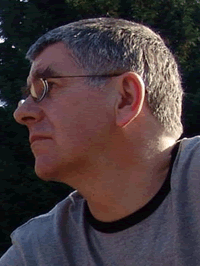
In 2008 I decided to use some British Library acquisition funds to start commissioning Rob Wilkinson (then OHS treasurer) to interview some of the leading figures in the origins and development of British oral history (and the Society). We started with the founders and early committee members. Some had already died (Theo Barker and John Saville, OHS’s first two chairmen; Raphael Samuel; and Trevor Lummis), and some sadly declined (Christopher Storm Clark, the first Secretary; Billy Kay, pioneering Scottish oral history radio producer; Eve Hostettler, active in ground-breaking oral history work in London’s docklands).
Many more agreed and what we called ‘An Oral History of Oral History’ has now collected over forty interviews: many life stories and many with people who have since died, notably Alun Howkins (part of the folk-life strand in UK oral history), Bill Williams (who set up the influential Manchester Studies and led a drive to collect Jewish and Holocaust testimonies) and Hywel Francis (who established the South Wales Miners’ Library’s oral history collection). The commissioned interviews have been supplemented with other recordings with key figures like author Tony Parker, television programme-maker Stephen Peet, and the famous US oral history writer and broadcaster Studs Terkel; and also with research collections such as George Ewart Evans pioneering recordings (many in Suffolk), and Paul and Thea Thompson’s ‘Edwardians’ interviews.
To mark the fiftieth anniversary – and the OHS@50 timeline which we’ve compiled – the BL commissioned Camille Johnston to delve into the archive and prepare some clips from the hundreds of hours of recordings….
How to choose from such a rich collection?
It’s rare to have an opportunity to really spend time with the archive and do a detailed survey of a collection. The recordings in ‘An Oral History of Oral History’ tell us about the foundations of oral history practice in the UK. They also tell us about what it feels like to do oral history and be part of the oral history movement. My task was to look specifically at the history of the Oral History Society, which, thanks to Robert Wilkinson’s interviewing style, has been gently teased out across the recordings.
To get a sense of what I was looking for I compiled a matrix – a list of key events in the history of the OHS linked to relevant dates and the names of individuals who were involved. This gave me a useful range of search terms to work with when studying the collection. The next step was to apply combinations of these names, dates and keywords to the interview documentation using the powerful advanced search function of the British Library’s Sound & Moving Image Catalogue.
Interviews in this collection are helpfully summarised with timecodes, so I could quickly read through to check which parts were relevant. The next step was to listen to those sections to check which would work as short audio clips. I arranged the extracts under consideration into chronological order, as Rob and I were keen that the clips be spread throughout the timeline, and tried to fill any gaps. After a final review, it was time to edit the clips and create a package of metadata and transcripts to support online access.
What’s included?
Sixteen extracts have now been added to the OHS@50 Timeline: fifteen new clips and one reused. They tell us about the ‘glamour’ of the early days, how the Society came about and who was involved (Brian Harrison), the origins of the journal Oral History (Joanna Bornat, Paul Thompson) and where the phrase oral history comes from – for this clip I thank Charlie Morgan, see his blog where it first featured.
There are debates about subscription fees (Paul Thompson), musings on the ‘homemade’ feel of the OHS (Colin Bundy), campaigns that the OHS contributed to (Vic Gammon), thoughts on chairing a society of oral historians (Beth Thomas), and connections with the National Sound Archive at the British Library (Rob Perks).
We have reflections on the life and work of George Ewart Evans (Alun Howkins) and Raphael Samuel (Thea Thompson), comparisons with History Workshop (Tony Green), the response to the ground-breaking 1975 book Fenwomen (Mary Chamberlain) and how it felt to join the OHS committee (Donald Hinds) and be part of the regional network (Cynthia Brown).
You can listen to the clips in context within the OHS@50 Timeline, or access them all on the BL’s SoundCloud clip bank. To browse full recordings that are available online see the BL Sounds collection page for Oral History of Oral History in the UK. Summaries can be searched on the Sound & Moving Image catalogue using the collection reference C1149.