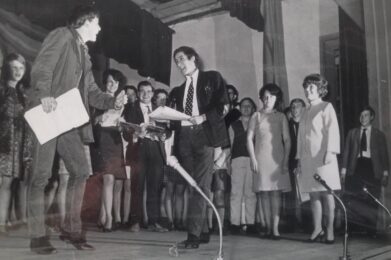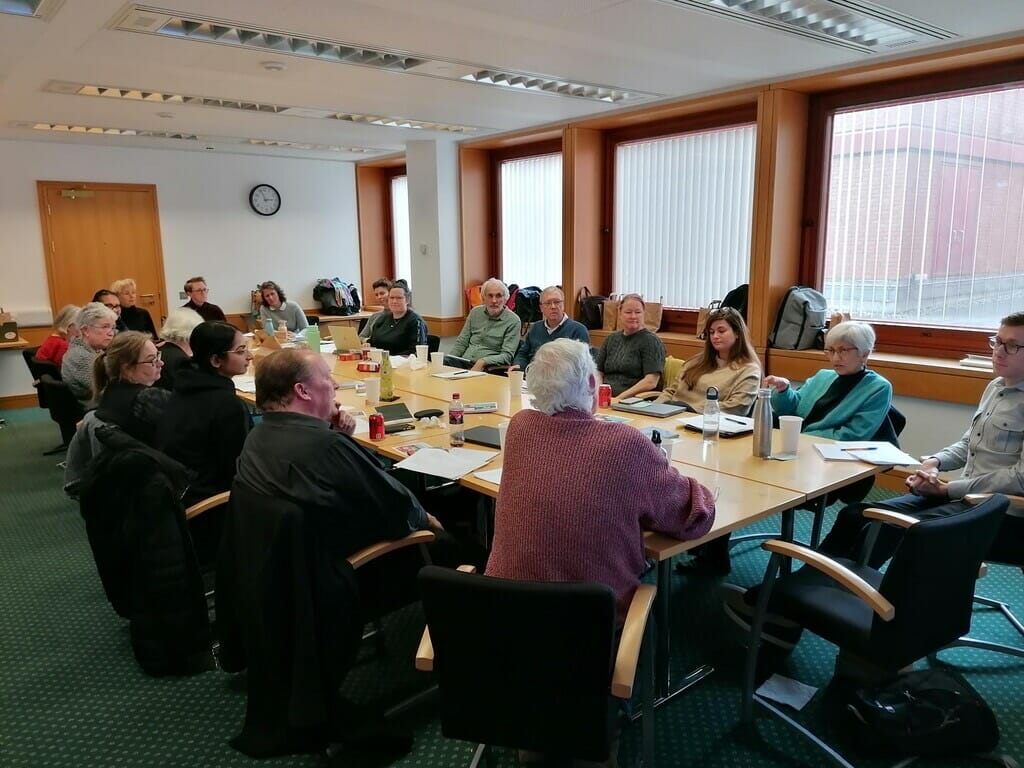
2023 marks our 50th birthday and happily coincided this year with our periodic strategy weekend in March where trustees got together to reflect on the Society’s current strengths and challenges, and to plan for the future. Our overarching themes for this year were membership and sustainability. As you know we always try to involve the wider membership in these discussions and this year we did so through a survey in January prior to the weekend, and we also consulted with members again at our online AGM in July. We do take your comments and views seriously and in this blog I’ve selected some of the more common issues raised in these consultations followed by (in italics) a response in my role as Chair, followed by a brief summary of our current initiatives and plans.
What are we doing about benefits for members? Shouldn’t there be more specifically for members to encourage people to join the OHS?
A lot of information is available for free on our website in line with our function as a charity sharing best practices. Whilst we want to continue to provide free advice and support to the wider oral history community, we do need to attract members and raise sufficient income to ensure the Society’s sustainability. We have set up a working group to explore this which will report back later in 2023-24.
Following on from the first point should we be looking into charging for some of our services?
Although we remain committed to offering many of our services for free, we already charge for training and attending our annual conference. There may be other services we could put behind a paywall for non-members that might encourage people to join and/or bring in addition revenue for the Society.
Becoming a member of the OHS online is not as smooth or glitch-free as it should be.
We agree and we are looking into ways of improving this with some paid professional support. We don’t have a timeframe for this yet, but we’re hoping to have a solution over the next 12 months.
There is a gap between academic and non-academic oral history.
We think it’s important to encourage a wide community (both academic and non-academic) of those interested in practicing and using oral history and we work hard to bring all those involved in oral history in dialogue with one another. We have a number of new and well-established initiatives to support this aim. Our wonderful journal Oral History features contributions from academic British and international oral historians and also from those not based in higher education, for example from schools or independent historians or from people working in museums and archives. We have a blog section on our website where Society members are encouraged to write about oral history in ways that will appeal to both academic and non-academic audiences. The opportunities for using sound and video clips and more visual and interactive resources in general on our website should further this aim. We’re also committed to facilitating academic and non-academic practitioners working together, as has been the case in a number of lottery heritage-funded projects.
The Society is too London-centric.
I don’t believe this view is accurate for a number of reasons. The Society’s members and its governing committee are drawn from all over the UK and they ensure that many of our activities take place outside London and the South East. Decisions made by trustees about venues for conferences and events, volunteer and staff appointments and other issues are all considered carefully for their geographical implications. Our Regional Network offers advice on the ground throughout the UK and many of our SIG members and officers are based around the country. We work closely with similar organisations across the globe. The pandemic provided new and cost-effective opportunities to meet people from all over the country and worldwide with the aid of online platforms like Zoom. Consequently, many of our meetings of SIGs, regional network drop-ins, conferences, and committee meetings benefitted from this technical possibility, and many have remained online or at least offered a hybrid option with a consequent increase in national and international attendance. And when we do meet in person, we are always looking to do so outside London, so our regional network and annual conference in 2023 were held in Birmingham and Nottingham respectively.
The OHS has a lack of visible minorities at all levels of the organisation.
This is a genuine concern of many inside and outside the Society and as a white middle-class male (who also happens to live in London) it’s a view I share. The rationale for our ‘in-dialogue’ series of discussions was precisely to strengthen collaborative links with black and minoritised organisations and oral historians, as well as provide an opportunity to reflect on current practices within the OHS which might unconsciously discourage wider membership and engagement. We have also been mindful of this in our approach to appointments to the Committee, but more could be done in all quarters of the Society. Moreover, there are other groups and communities who may also feel marginal to the Society and which call for similar interventions.
As a result of member feedback and discussions held over the weekend in March, groups have agreed to action the following: developing new processes for frictionless joining; considering different tiers of membership and related benefits; exploring different models for OHS conference/events; developing OHS online publications; rebooting the Regional Network; revising governance of SIGs; improving messaging; and finally improving communications with members, of which this blog post is the first attempt!
If you would like to add to or comment on the above, please do so either by mailing me directly or via our website by contributing a blog post. Meanwhile we’ll keep you up to date with things as they develop through our e-newsletter.