When we saw the theme of this year’s conference – ‘Whose Voices?’ – we were determined to apply to attend. The issue of giving voice to those who are seldom heard exactly matched the aims of our newly-setup Community Interest Company – Loyal Friend Projects that is based in Lowestoft – Britain’s most easterly town. The focus of this, our first project (and presentation for the conference), is a group of people who helped set up and continue to develop a small community and arts café based in the town’s historic high street – a local area that has, over time, suffered steep social and economic decline.
The café – ‘The Mayfly’ – is named after one of the many pubs that were found in the Beach Village of old – a venue where latter-day fishermen and their families congregated and socialised. The current café is now at the heart of a very different community made up of those who live in or around, who work nearby or who just like socialising in this part of town. In our project we highlight some of their lives and life histories – some who were born and bred in Lowestoft and some who hail from much further afield – but all with very different stories to tell. These accounts of ‘who might you might meet in The Mayfly’ might surprise you – they did us! We wanted to share them at the OHS Conference as they tell a story of current-day Lowestoft and its people – the diversity, resilience and creativity we found here – a very different story from the one that is usually told.
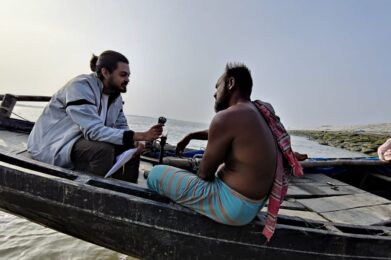
Writing an abstract and then having it accepted is only the start of any conference journey. While we were thrilled to be attending the conference we still had to find the money to pay for our trip and, more importantly, to analyse our taped and videoed interviews so as to prepare key parts for ‘presentation’ for an unknown audience and context. (It was also the first time that we had embedded audio into a PowerPoint too!) There is nothing like a deadline for getting something done but we did it (and caught all the correct trains) and then found ourselves in a funky hotel in the heart of Glasgow the day before the start of the conference.
We found Glasgow to be such a great city! And we had the added bonus of going on the Radical Glasgow Walking Tour and to be part of the small group who were taken behind the doors of University of Strathclyde to see some of its archives. We couldn’t have asked for a better introduction to the city of Glasgow, the University and our first conference of the Oral History Society.
As self-funding delegates to the Conference we could attend the sessions that piqued our individual interests – for Susan ‘women’, ‘archives’, ‘methods and approaches’ and for Christina ‘Ireland’, ‘youth’ and ‘refugees’. In our own session, Community Voices, we met fellow oral historians working in the community i.e. outside of academia and institutions, and so could compare our approaches, challenges and the insights gained from being ‘insiders’ in the communities we were researching. The discussions with people outside of the sessions and the sharing of experiences, knowledge and advice were invaluable: we are still connected to some of those we met.
Back in Lowestoft, but with the added ‘boost’ that the OHS Conference had given us, we have been continuing our interviewing and planning for our exhibition/display later in the year. We are really grateful to the organisers and to the OHS for providing a free place for us to share at the conference and for ensuring that we were booked on to the ‘extra events’ (the archive and radical Glasgow tours) at the start. We hope to contribute to the Society in the future and will definitely join a SIG on ‘community voices’ if one is set up.