Until a few months ago, I had only a vague understanding of what oral history was, and I had certainly never visited an oral history archive. Now I realise they are a fantastic resource for young writers like me who want to connect with stories from past generations.
I discovered oral history thanks to my involvement in an East London creative project called Trellis Field Works organised by UCL. Six young people – including myself – were matched with local artists and asked to contribute to an exhibition about East London life.
The project I was paired with – ‘Along the Lane’ – was the outcome of artist Rechonski and UCL researcher Jane Wilcock, who co-facilitated a series of creative workshops with community members, mainly elders, from Jewish and Bangladeshi groups in East London. Through the exploration of textiles and scents, as well as the sharing of stories, two sculptures were created for the exhibition that represented the collective memories of the East End.
I was commissioned to produce a piece of creative writing which would complement the sculptures. I wanted my writing to reflect their themes: memories, community stories, the history of the area. I decided to write a series of guided walks detailing my experience moving through these historic streets and a resource for other visitors to do the same.
But how, I kept thinking as I wandered through the area, do I capture a history I know so little about? How do I show the rich array of memories associated with these streets without it feeling like the product of fiction, made up as I went along? Had I been given longer to spend on the project, I would have tried to conduct my own interviews with older members of the Jewish and Bangladeshi communities. But as this wasn’t possible, I turned to existing forums to access people’s memories. This is how I discovered my local oral history archive.
I studied English Literature at university, so I was familiar with using libraries for research. But using archives felt a lot more daunting. However, I knew they would contain exactly what I was looking for: real people’s voices – past and present – telling real stories. I emailed the Eastside Community Heritage archive and booked in a visit for the following week.
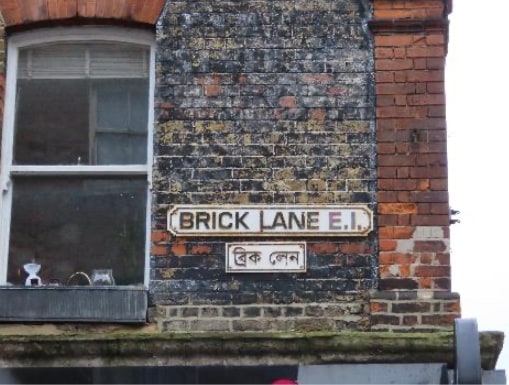
Sitting in the crowded corner of the archive room, surrounded by boxes and listening to recordings of individuals talking about their experiences living in Brick Lane, I began to really understand the area. Until this point, I’d been walking the streets alone and had nothing but questions. But as I listened to the recordings, I realised I needed these people with me, people who knew the area and who could explain it to me as we strolled along. So I decided to turn the voices into characters and weave their memories into my own creative writing.
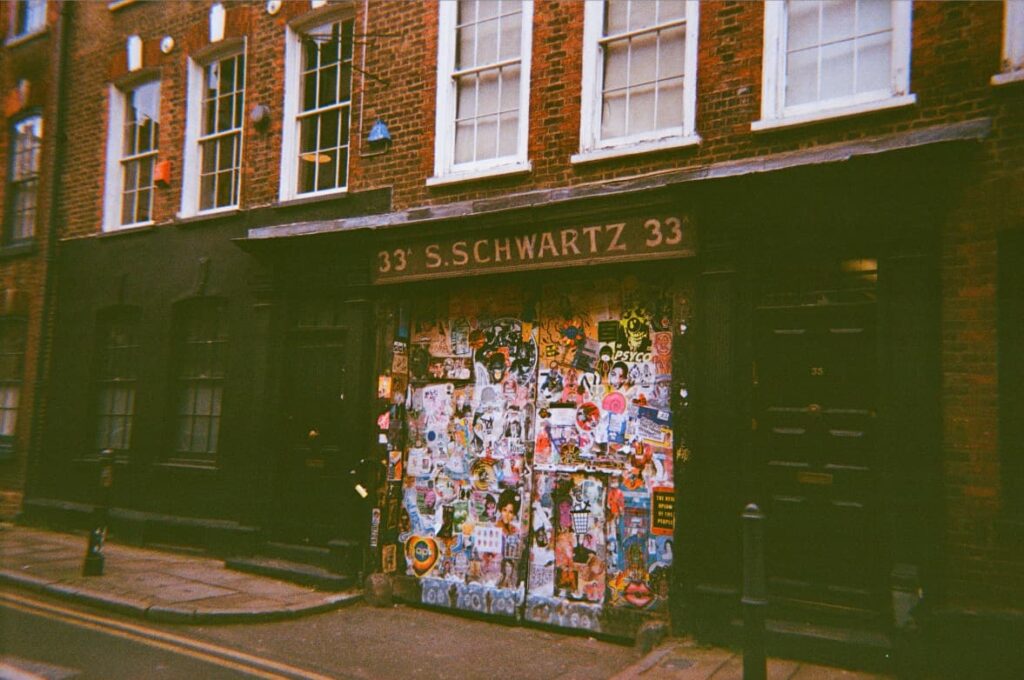
The challenge now came in finding the middle-ground between fiction and fact. Sometimes I started off with the archive. I’d listen to an interview where a building was mentioned, and my walking route would change accordingly to accommodate it. At other times I knew exactly what I was looking for – I just had to find it! There would perhaps be a street that had caught my attention when walking, or a house I had grown particularly curious about. I would sit for hours trying to find it mentioned in an archive, reading through transcripts where the roads were not quite the right ones: too far south towards Whitechapel, too far north beyond Bethnal Green. Sometimes I was lucky, and I’d find an interview that referred to the spot I was looking for. Other times my questions would remain unanswered. But it was part of the learning experience of using archives: to know exactly what you’re looking for is sometimes to miss the point.
My favourite moment came towards the very end of the project. My deadline was approaching, and the booklet was pretty much written, yet – upon feeling something was still missing – I turned back to the interviews again. I wasn’t sure what I was looking for exactly, something that showed humanity perhaps. Then I found it: a transcript from an interview in 2006. The man had been talking about his life in Brick Lane, telling amusing stories, but it was the observation ‘[he laughs]’ in the notes that caught my attention. Until then I hadn’t understood why emotion should be recorded in oral history transcripts. Now I could see the value in its inclusion.
The speaker had been reminiscing about a café in Brick Lane in the 1970s, where the men and women had spent their evenings flirting innocently with one another. He’d joked about his youth, his naivety and how long ago it all now felt.
I do not know what the interviewer’s facial expression was when they heard this anecdote – their response was not recorded – but I hope that the laughter was not one-sided. In my writing I imagined the man standing on the corner of Commercial Street, huddled in a doorway with friends so the laughter could be shared amongst all of them.
I’ve no idea if this is where the real speaker would have chosen to stand. I doubt I’ll ever get the chance to ask him. But I like the idea that every time I walk past that corner now, it’s his words that I will remember and his face I will imagine.
Eliza’s publication ‘Walking to Remember: Retracing London’s East End’ is available to read here: https://linktr.ee/retracingeastend