The role of British soldiers in the Korean War which lasted from 1950 to 1953 has been largely forgotten in this country whereas in America there are massive libraries of oral interviews with their servicemen. Go to most war memorials up and down the country and you’ll see barely a mention of those who served and died in the struggle. Today, only a handful of the veterans who fought there are still alive. Indeed, the veterans’ association has now been disbanded with no one left to fight their cause.
In all 100,000 British soldiers served during the three-year conflict with just over 1,000 killed and a further thousand captured and held in atrocious conditions by the Chinese and North Koreans.
When I began my research, I was very lucky in that my first port of call was to establish whether the soldiers had a veterans’ association of any kind. And indeed, they had and much to my surprise the secretary, Bill, lived just a few miles from me. I quickly arranged for us to have a chat to tell him that I would like to do a series of oral history interviews with the former soldiers which I could then turn into a book. He was more than enthusiastic. ‘We’re forgotten,’ he said, ‘nobody remembers us and what we had to put up with!’ He then handed me a list of all 3,000 remaining members along with addresses and phone numbers. It certainly made my job a lot easier.
And so, I began with a formal interview of Bill himself. My next initiative was to visit some of monthly meetings of the veterans where I told them of my intentions and asked if any of them would be prepared to be interviewed. Mainly they were, so I jotted down addresses and phone numbers of those who seemed to have interesting tales to tell. My only regret was one soldier who had been a prisoner and had no intention of ever talking to anyone about his experiences which had clearly left a deep scar on him.
In all I interviewed about 30 soldiers, most of them from the north west region. What I didn’t want to know about was the strategy and story of the war. I wanted to know what it was like for an ordinary soldier and how they survived the hardships of war. I wanted a social history, not a military history.
Their stories were astonishing. For a start, almost all of them were on national service; 17/18-year-old conscripts, from places like Manchester, Liverpool, and Preston. Ordinary lads dragged from whatever job they were doing and thrown into the army. Of course, not all conscripts went to Korea but the vast majority did.
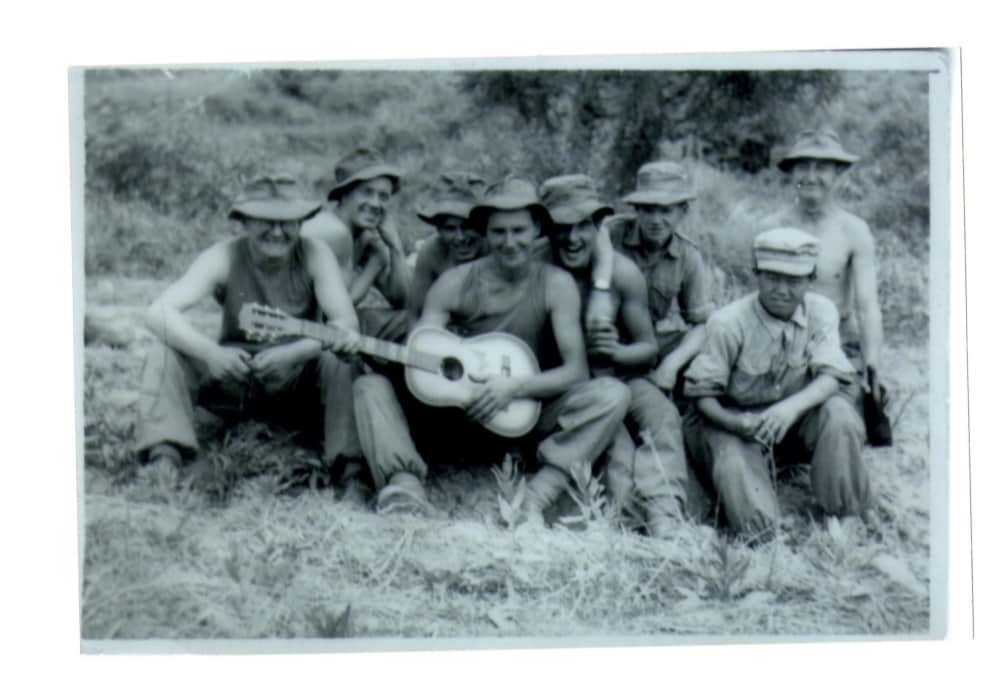
‘You dreaded the brown envelope arriving,’ said one. His parents dreaded it even more.
And off they went. A few months basic training and then they were told that they were going to Korea. Now that was really exciting for many of them who had barely stepped out of their local cities and towns, let along gone abroad. They travelled by boat and what an adventure that was, steaming up the Suez Canal, sometimes stopping in Singapore, Ceylon (as it then was) and on to Hong Kong where they would be stationed for a few weeks, enjoying the sunshine, some sports and general recreation. Then, they were off to Korea. And that’s when the fun stopped and the reality began to sink in.
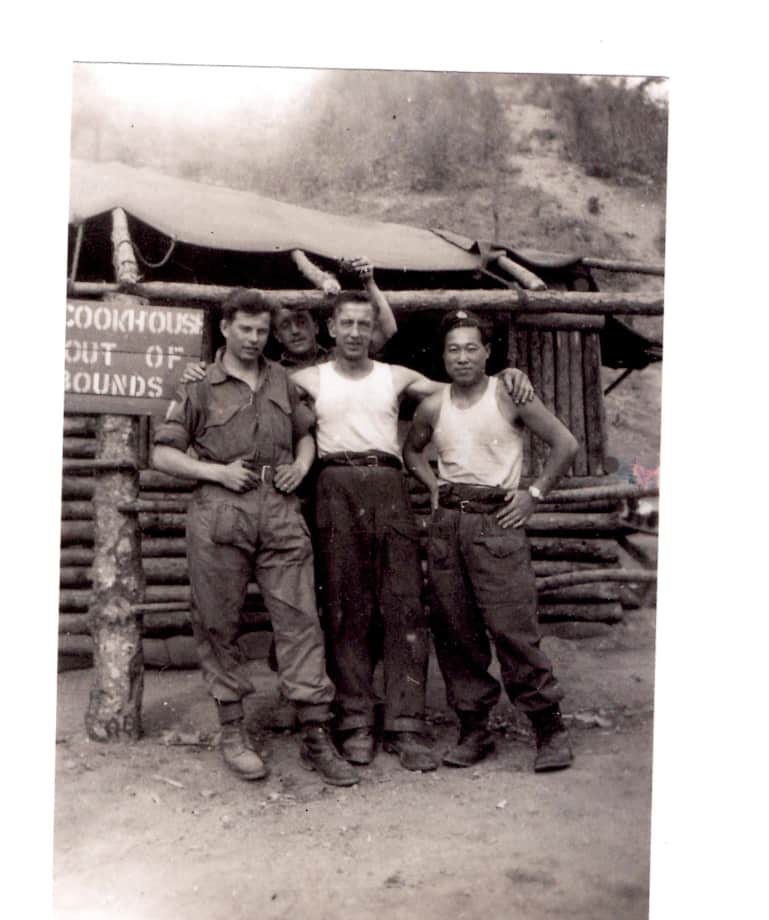
The training was fairly basic and their uniforms even more basic, something they discovered once the snow and winter winds set in. Temperatures dropped to minus 40 degrees, making everything they did tiresome and difficult. It was trench warfare again. They dug in and made do as best they could. There were no showers, no proper toilets, no changes of clothes and poor rations. It was abysmal. They made slow advances, often just a few metres, then dug in only to be forced back the following day. For months on end, it went on relentlessly.
It was just like the First World War – put your head above level and you’d get it shot off. One soldier recounted to me how his mate, standing next to him got a bullet through the head and was killed. ‘He just dropped dead alongside me.’
There wasn’t much fun, apart from the weekly delivery of cigarettes and letters though these were often ‘Dear John, I’m sorry to have to tell you that I’ve met someone else….’
The highlight seemed to be getting a letter from home or even better a newspaper with the latest football results although even these were usually a month behind. The newspaper would be read from cover to cover and passed on to someone else. Maybe once every six weeks or so you might get relieved and retreat to a camp position behind the lines where you get some decent food, a wash and rest.
And if you were really unlucky you got captured by the Chinese. ‘When I got captured,’ recalled one man, ‘I didn’t know what would happen, how long I’d be held for. If I’d nicked a bike back in Manchester I’d get sentenced to six months. At least I’d know when I was coming out but there I had no idea.’ As it was, he was a prisoner for two years, suffered torture, saw comrades die of disease and was frogmarched for miles. He’d never spoken to anyone about it before he told me, tears rolling down his cheeks. He even showed me a letter from the Ministry of Defence to his parents telling them that he was missing presumed dead. They got something of a shock when he turned up back home in Manchester.
But for most going home was something of an anti-climax. They arrived by boat in Southampton or Liverpool. When they disembarked, they were searched and any souvenirs they had brought home were promptly confiscated. Families had not been told about when they might arrive, so there was never anyone to greet them. They were given a packet of sandwiches, their train fare and told to report within the next two weeks at some local barracks for formal demobbing. And back in their towns and cities nobody seemed much interested in them apart from their own families. One lad recounted how he went down to the local pub to see his mates but they didn’t seem much interested. ‘Haven’t seen you around for a while, where’ve you been?’ they asked nonchalantly. ‘It was just taken for granted.’
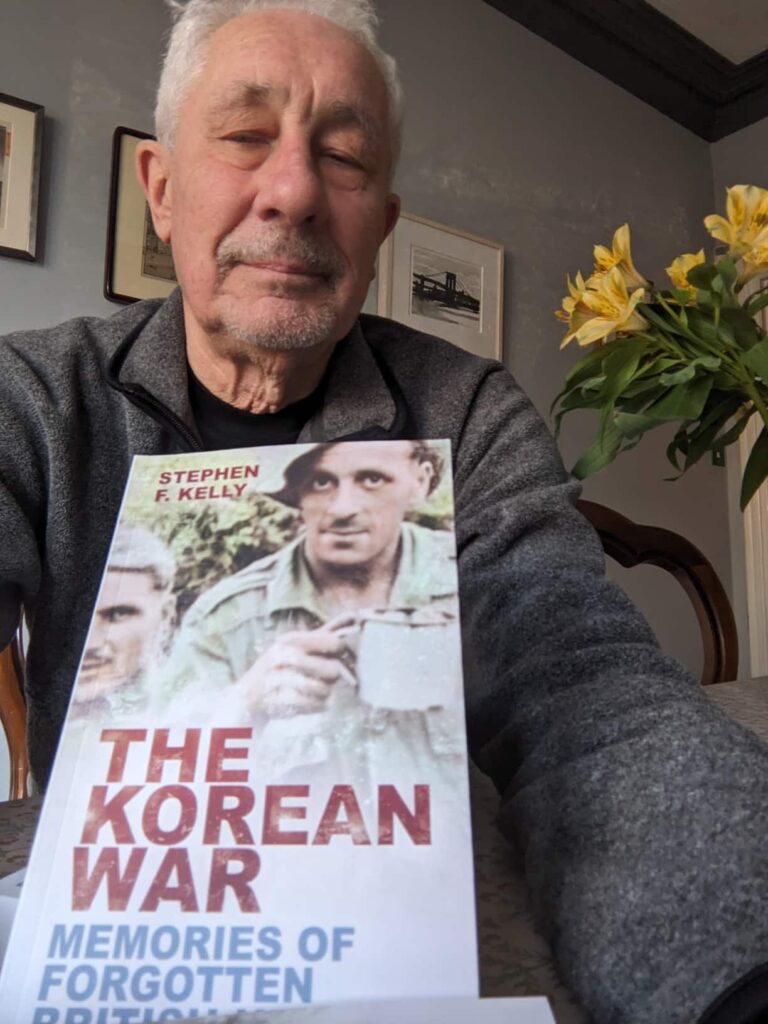
When the book was published, I held a celebration at one of the veterans’ meetings. I took books along, and had cakes baked for them. They were so grateful and will forever remain in my memory as some of the bravest and most decent and kind men I’ve ever interviewed. The book has now been republished with some additions. I hope it stands as a lasting testament to those lads, most of them teenagers at the time, who served in a war that still remains unresolved.