Forester’s Forest
The Dean Heritage Centre Oral History project has been part of the 5 year NLHF funded Foresters’ Forest Landscape Partnership Programme formed from an association of local organisations and community groups within the Forest of Dean. The aim has been to raise awareness and participation in the built, natural and cultural heritage of the Forest.
Dean Heritage Centre Oral History Project
The Forest Oral Histories project has been to digitise and catalogue our unique collection of audio cassette tapes and minidiscs from the 1980s to 2000s. The project has been managed by Collections Officer Nicola Wynn with the help of volunteers.
Digitising the audio recordings will not only preserve them but also enable access to a wide range of people. The recordings are interviews of Foresters talking about various aspects of their lives in the Forest of Dean. They are fascinating to listen to and reveal what life was like in the Forest fifty to a hundred years ago. People talk about their experiences in mining, forestry, various industries, childhood, schools, growing up, shopping, towns and villages, Forest dialect and much more.
The collection was begun by Elsie Olivey, a founder of Dean Heritage Museum, who could see Forest life rapidly changing and decided to preserve people’s memories by recording them. In an interview on Radio Severn Sound in 1984 Elsie describes why she is doing the interviews:

‘We go out and talk to old people in the Forest. We are trying to get the old ones first because that’s the generation that is fast disappearing. We talk to….men …on mining…and women …domestic service… ….things on tape you get never read in the history books because you are getting the thoughts of the people themselves’.
Collections Officer Nicola Wynn ‘Much has been written about the history of the Forest of Dean, but the recorded interviews further enrich this history by recording the unique personal experiences and memories of people. They really bring history to life and allow us to connect with people’s lives. The recordings reveal the heart and soul of daily life and are by turns fascinating, poignant and moving.’
We have collaborated with project partners Voices from the Forest, who have recently recorded interviews of people taking a biographical, life story approach to discover the occupational histories of men and women in the Forest of Dean in the last half of the twentieth century. These recordings have been added to the DHC Oral history archive. We have also collaborated with the Forest Dialect project which looks at the development and distinctiveness of the Forest dialect. This project is partially based on DHC oral history recordings.
Content
The interviews cover a wide variety of topics:
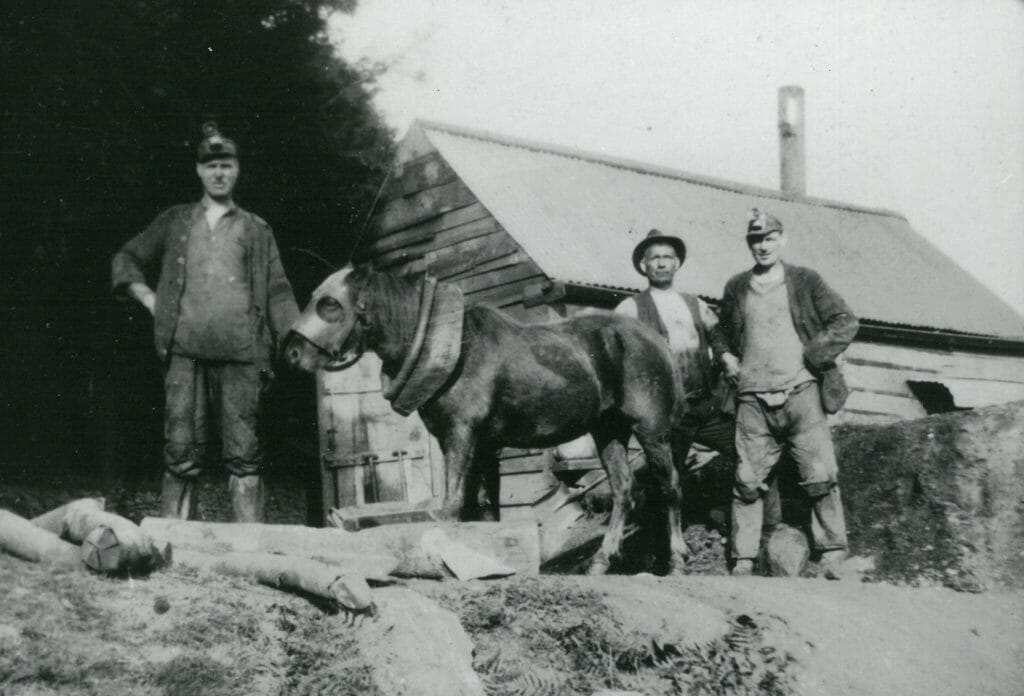
Industry & Work – Coal mining (free mines & large collieries), saw mills, iron mining, brickworks, nail making, tin plate, transport, farming, forestry, fishing, haulage, teaching, armed services, Rank Xerox
Home & family life – cottages, furnishings, washing, bathing, toilets, gardening, clothing, lighting, cooking, keeping animals
Towns & villages – descriptions, shops, events, cinema
School – various school experiences, teachers, walking to school, games played
Domestic service – experiences in what was the most common work by women
Religion – church, chapel, Sunday school, Temperence, outings & treats
War – both WW1 & WW2, life in armed services and on the home front, Americans in the Forest
Poverty & hard times – living through 1920s, 1930s and war years, living with little money
Strikes/Unions – General strike of 1926, lockout 1921, Speech House demonstrations
Sheep – miners running sheep, commoning
Health – before the welfare state, doctors, the Dilke hospital, home remedies, illnesses & accidents
Dialect – many examples of strong Forest dialect
Leisure/culture – choirs, cinema, songs, sport, fairs, days out, walks, social gatherings, events
Camp Mill (now Dean Heritage Centre) – saw mill, people living in cottages, children playing
Migration – moving in or out of the Forest for work
Miscellaneous – gypsies, old customs, humour, courtship
Film ‘Happy is the Eye’
Created by documentary filmmaker Ryan Powell, this film uses Dean Heritage Centre recordings and photographs, along with photographs and film footage shot by Ryan himself in the Forest, to build up an image of life in the Forest of Dean during the 20th century. It focuses on ways that people directly interacted with the natural landscape as part of their way of life. This film can also be watched via the oral history page on the Dean Heritage Centre website.
A learning curve
A very successful & engaging project, which has made us laugh and cry and learn so much about the people of the Forest of Dean. Memories range from interviewees grandparents in the 1800s to recent experiences in the Forest. One thing that has been a struggle is that no consent forms/paperwork was carried out for the early interviews meaning that we tried tracing relatives by various means for more information & consent to use the recordings. This was a more complex & time consuming process than we thought.
Accessing the recordings
Information, summaries, recordings, excerpts and the museum database of the oral history archive can be accessed at Dean Heritage Centre by making an appointment with the Collections Officer.
Legacy
The legacy of this project is an oral history archive of nearly 200 recordings spanning the 20th century covering a huge range of topics on life in the Forest of Dean. An important and unique social history archive for the Forest which will be a valuable resource to historians and people interested in Forest history. There is much potential in future years for incorporation into the museum’s interpretation and education and a variety of projects.
Enquiries
For more information there is an oral history page on the Dean Heritage Centre website including a few excerpts to listen to. All enquiries about the oral history collection are welcome. Contact Collections Officer Nicola Wynn by email [email protected]