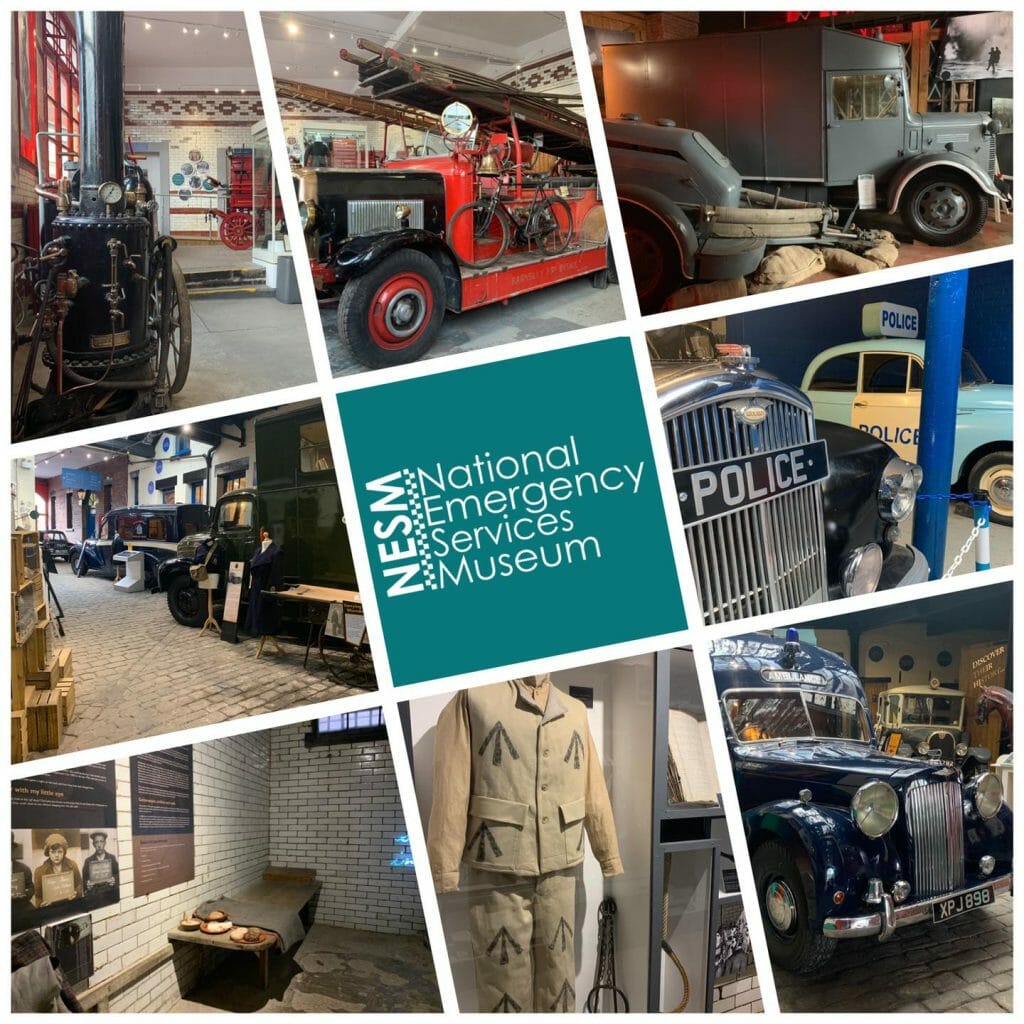
The National Emergency Services Museum (NESM) in Sheffield exemplifies a long-established historical institution that has only recently begun to include oral history as a central part of its mission. Strange, you might think, for a social history museum dedicated to rescue workers, communities made up of those- like firefighters and lifeboat operators- known for their rich and traditional cultures. Why would a museum established by emergency workers themselves have neglected to collect their stories from the well of living experience?
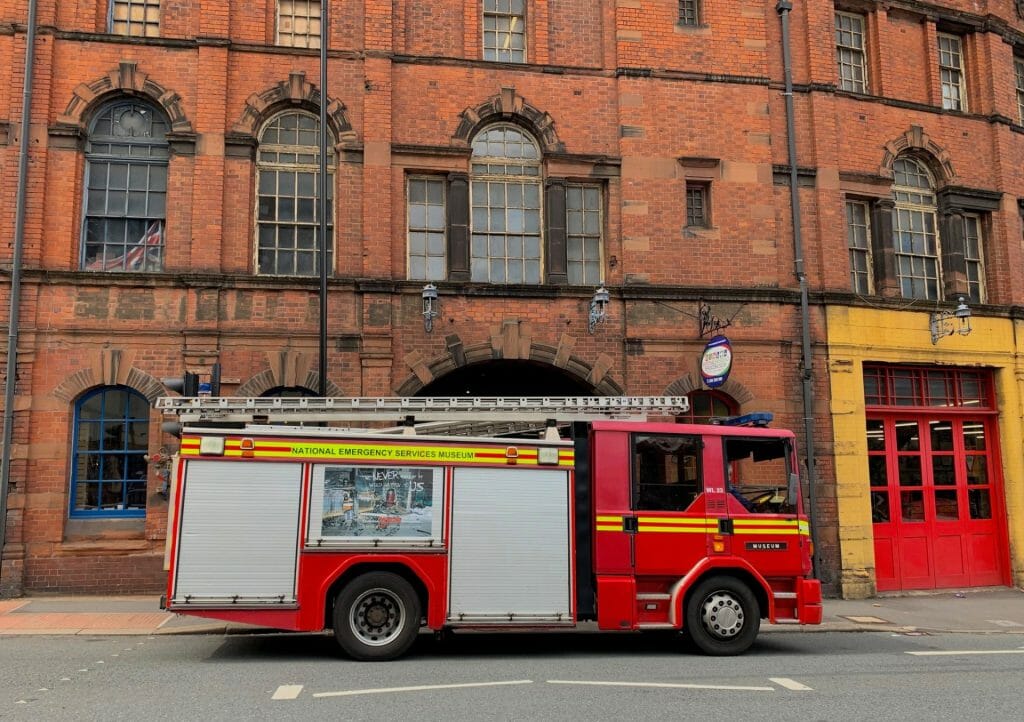
There were probably several factors at play, none of which is unique to NESM. Firstly, our museum’s foundation (in 1984) was- in common with many other transport museums- motivated by the enthusiasm of a number of skilled personnel (in our case emergency personnel) for the machinery with which they spent their daily lives working. NESM was founded as the Sheffield Fire Museum by a group of retired firefighters to house a collection of historic engines and equipment. For many years the city’s Old Fire and Police Station, which forms our headquarters, resembled a workshop for private collectors to study and preserve machinery.
A shift towards the social and cultural history of the emergency services and their people took root in the mid-2010s with the appointment of a new Chief Executive and Curator. Determined to develop the interpretation of the museum’s collection through the stories of those who worked with its vehicles, they embarked on an ambitious programme of development.
In the process of collection research, the team realised how little contextual information had historically been gathered about objects donated to the museum. In response they began to approach those who contact us with potential donations, to ask them to take part in an oral history programme.
We receive offers of donations regularly, often from retired members of the emergency services, and it has now become standard procedure to gather wider information on the donor than simply the basic dates and areas of work, and to offer the opportunity to record their experiences for an in-depth oral histories collection. This growing collection will eventually be made available to researchers through our library, while selected recordings are now being included as audio elements in our exhibitions, allowing those who worked with our collection to speak directly to museum visitors.
As a recent example, our Registrar has conducted a discussion with a former member of the London Air Ambulance, recording his experiences in major incidents including the 7/7 bombings. This is with a view to including the recollections in a forthcoming Air Ambulance exhibition.
But it’s not just the dramatic headlines we are after; we want to know about the person, their motivations, their wider experiences, their lives. Given the esteem in which emergency workers are held by the public (the old adage of ‘ordinary people doing extraordinary things’ has been reinforced recently by the Coronavirus Pandemic) it’s surprising how little in-depth biographical research has been undertaken. This is in contrast to the amount of professional opinions sought in journalistic interviews following major incidents.
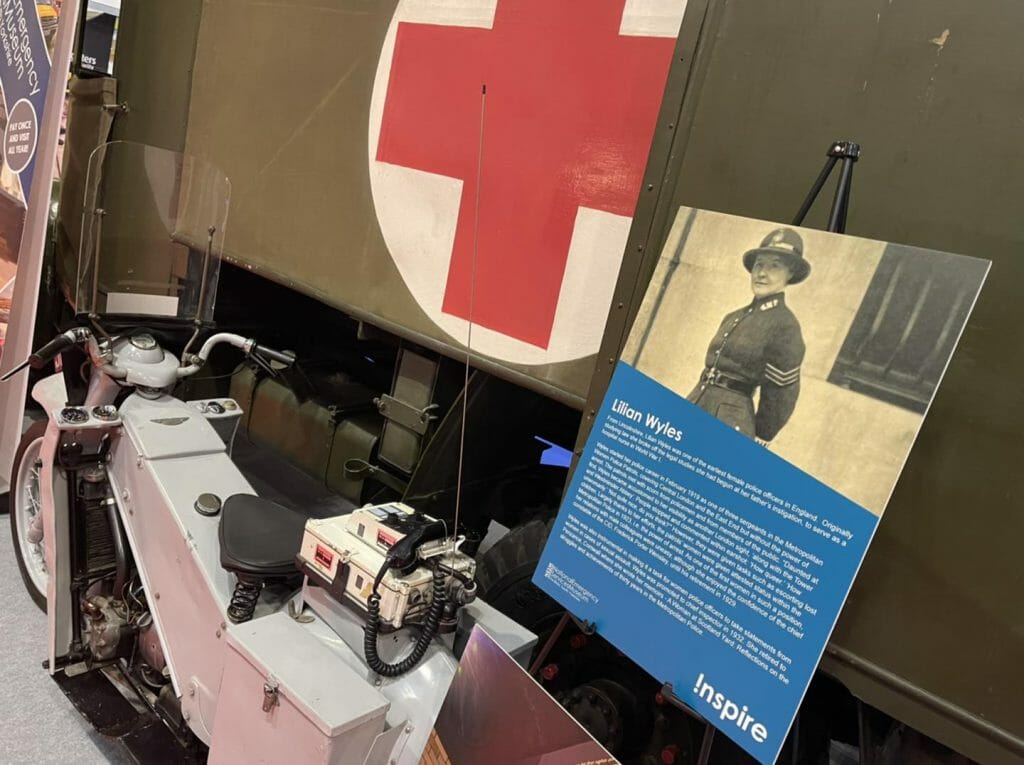
It’s perhaps the very visibility of emergency service workers with their blue-lighted transport and high-vis uniforms, and the human dramas they engage with, that has served to mask their wider experiences. I’m reminded of a passage in a historiography textbook recommended to me as a student when I took a course on anthropology. I found in a chapter called ‘Voices from Below: Doing People’s History in Cardiff Docklands’ (by the ethnographer and photographer Glenn Jordan) a paragraph that could apply equally to oral histories with the emergency services.1Jordan, G. (2003) “Voices from Below: Doing People’s History in Cardiff Docklands” in S. Berger, H. Feldner and K. Passmore (ed) Writing History: Theory & Practice (London: Hodder Arnold) In seeking out their stories “It was not so much a matter of finding out about a community that had been ‘hidden from history’ (to use the phrase made famous by Sheila Rowbotham). Rather, it was that of studying a community that was hyper-visible in the sense that they are always-already written about, yet simultaneously invisible in that key dimensions of their experiences have been hidden – mostly because those who represented them rarely bothered to ask them for their stories or points of view.”
NESM now asks every emergency worker who approaches us to give us their points of view. We also actively seek out those who may be willing to speak to us, with or without accompanying object donations. We plan to build the project further, including our Collections Department volunteers- many of them students- in the oral history programme, and allowing them, where appropriate, to engage in discussions with our subjects. Hopefully this will further help to instil the importance of the oral history process into the whole museum’s ethos.
Footnotes
- 1Jordan, G. (2003) “Voices from Below: Doing People’s History in Cardiff Docklands” in S. Berger, H. Feldner and K. Passmore (ed) Writing History: Theory & Practice (London: Hodder Arnold) ↩︎